
The Misminay Community of Peru: A Legacy of Ancestral Farming
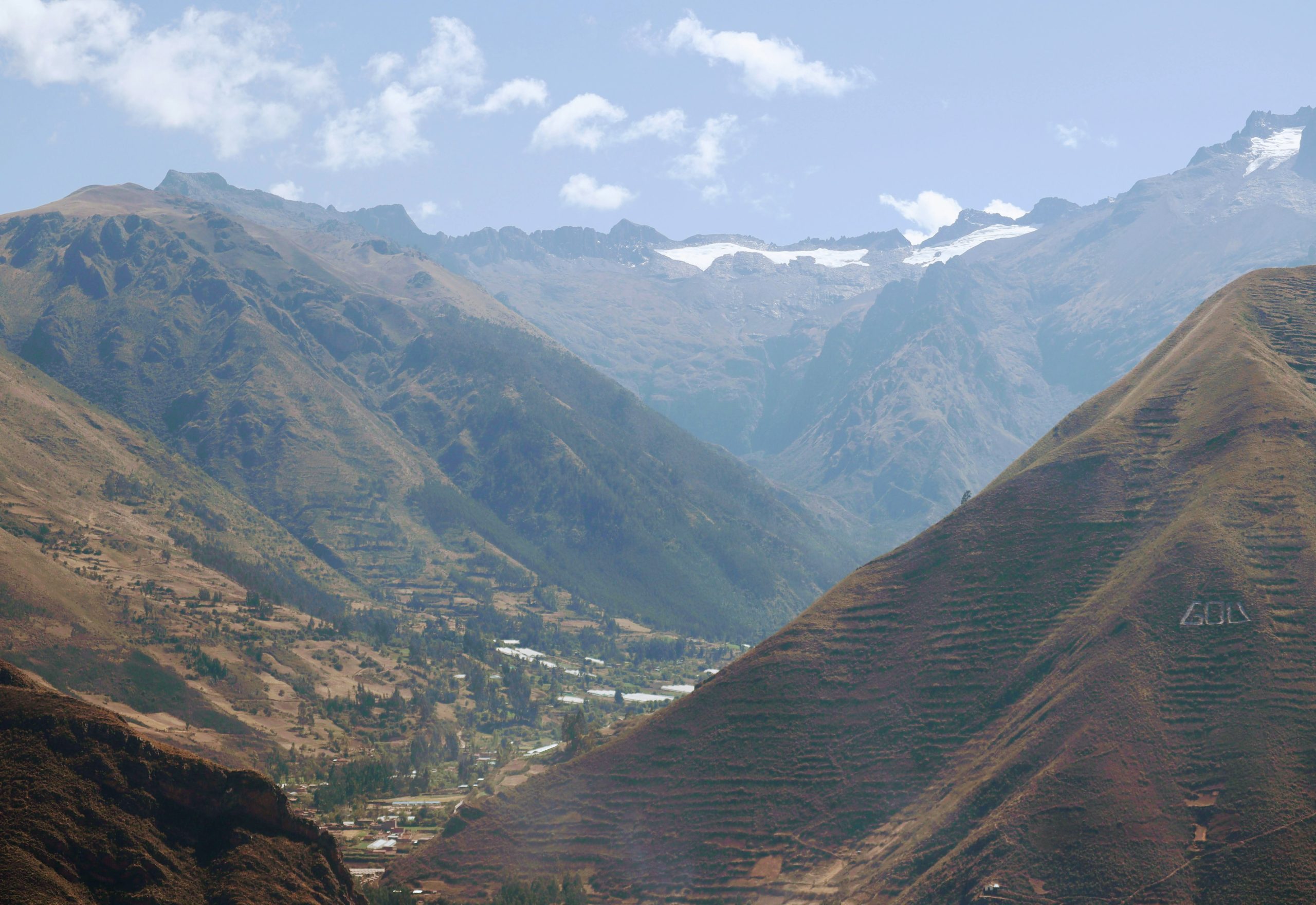
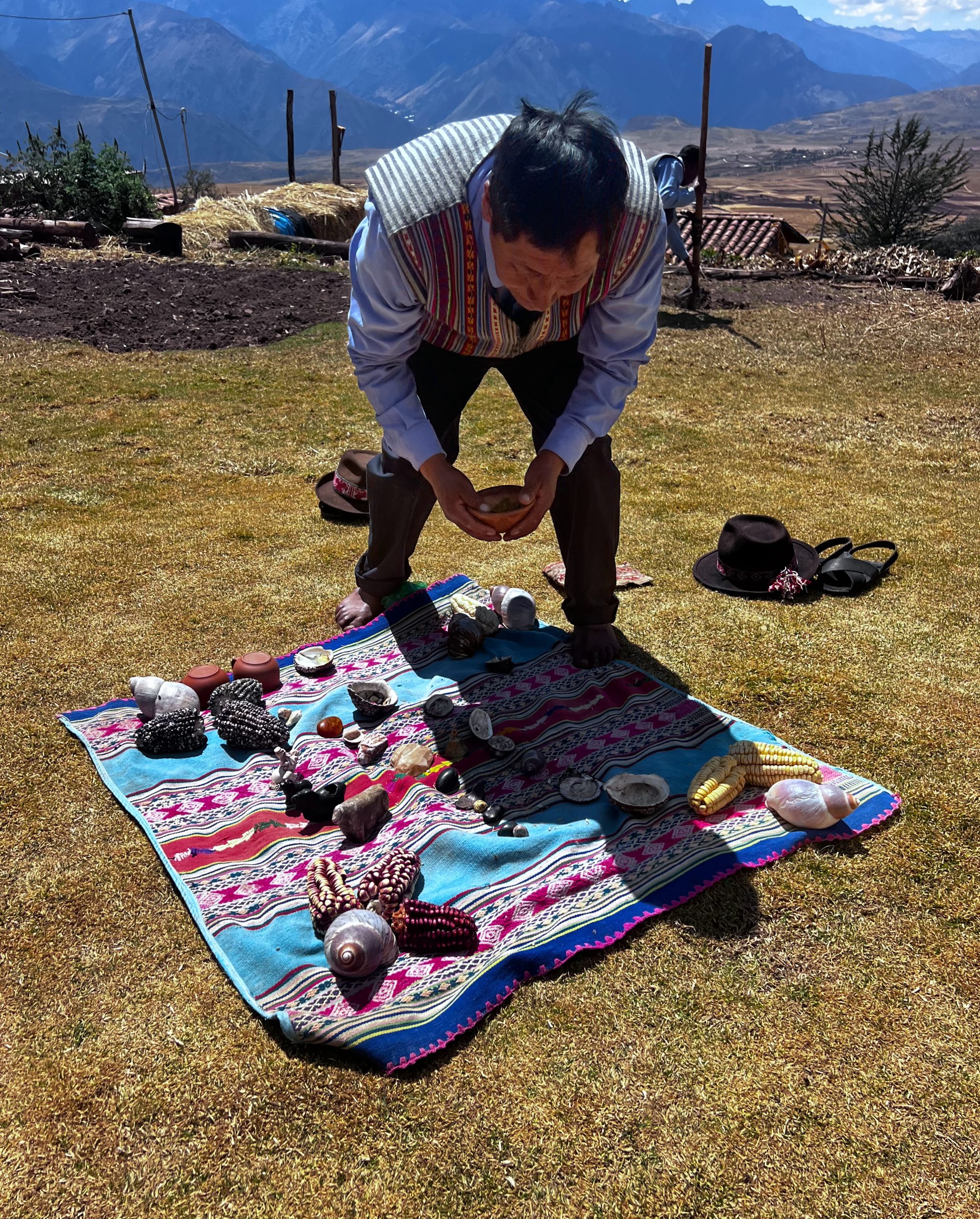
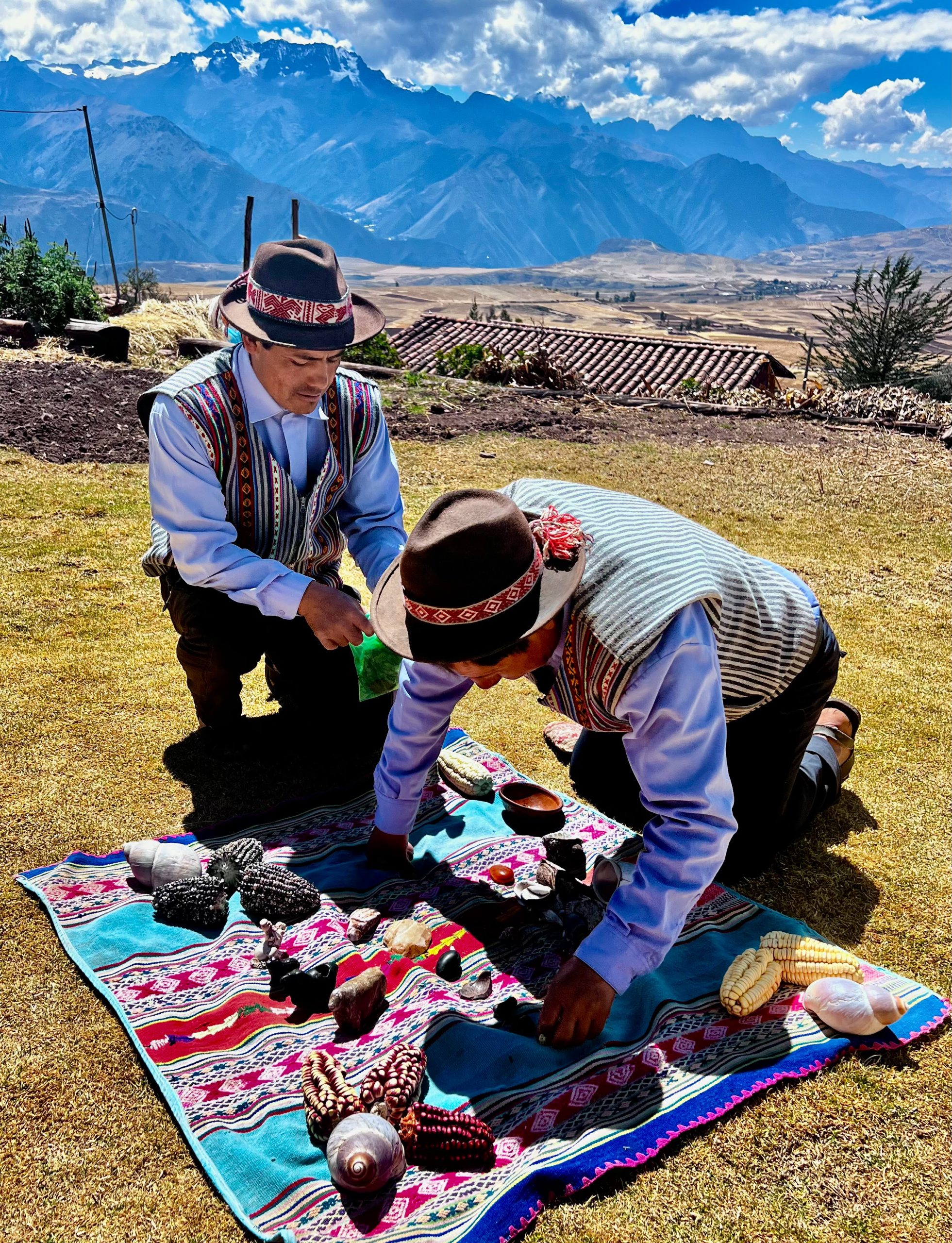
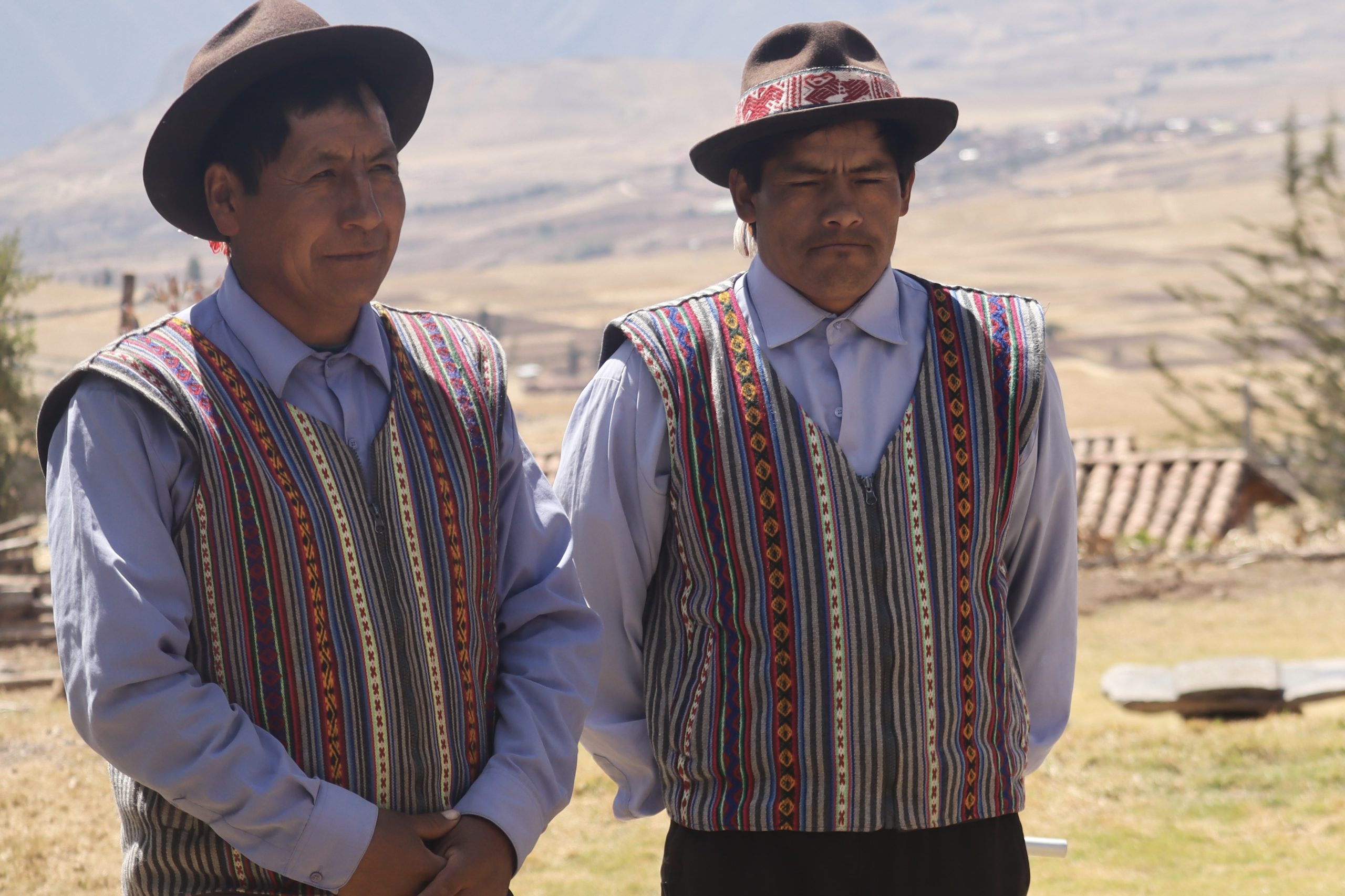
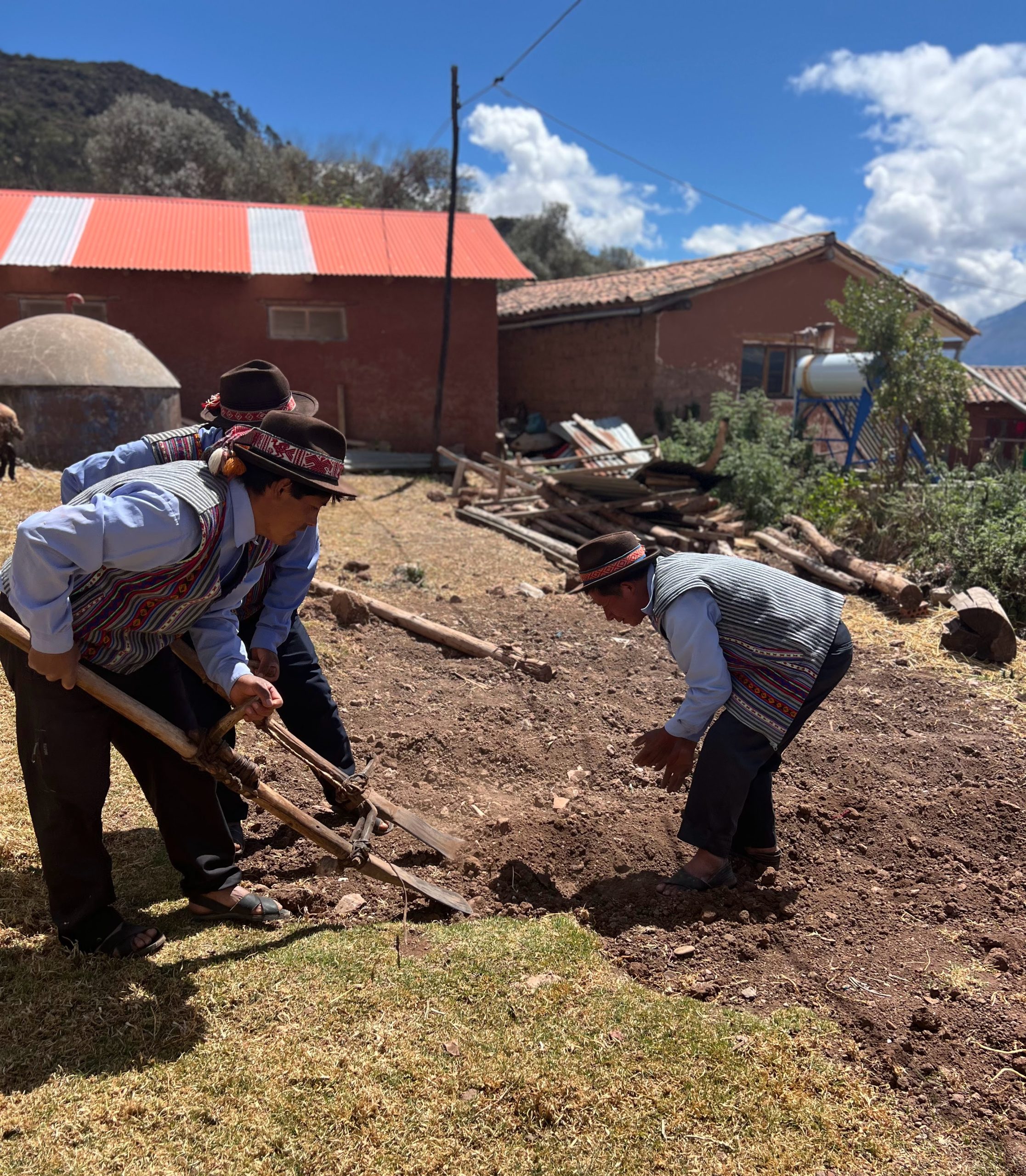
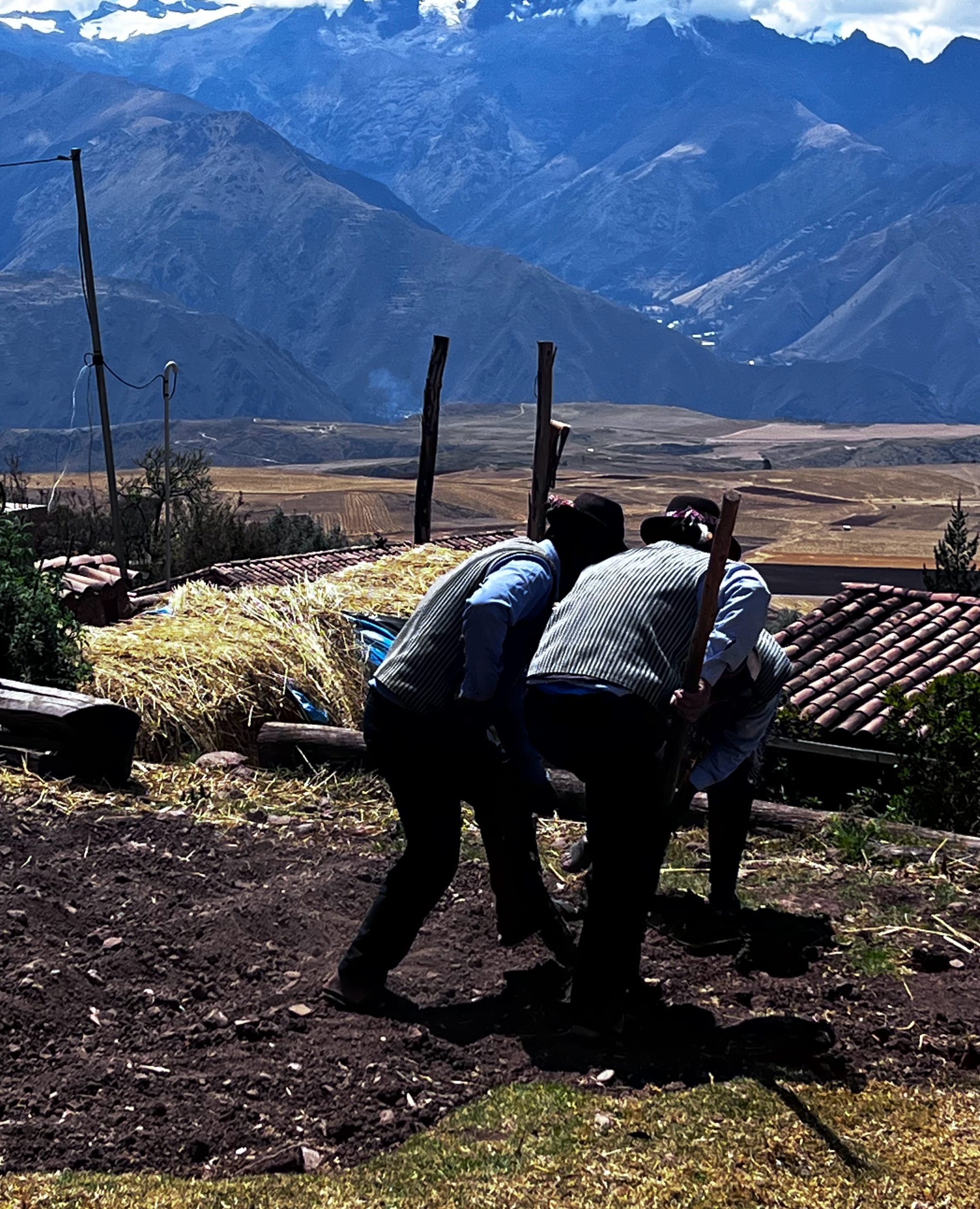
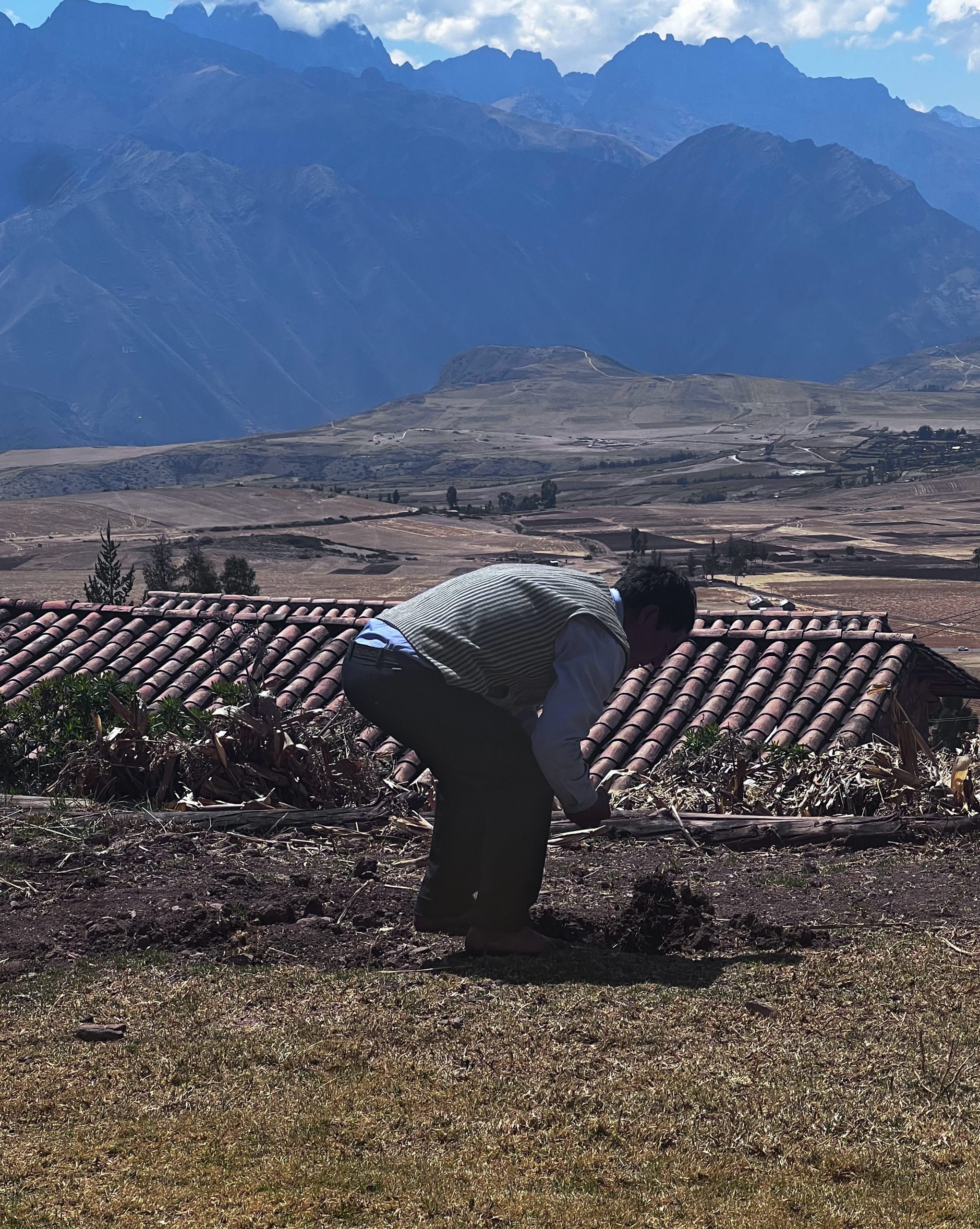
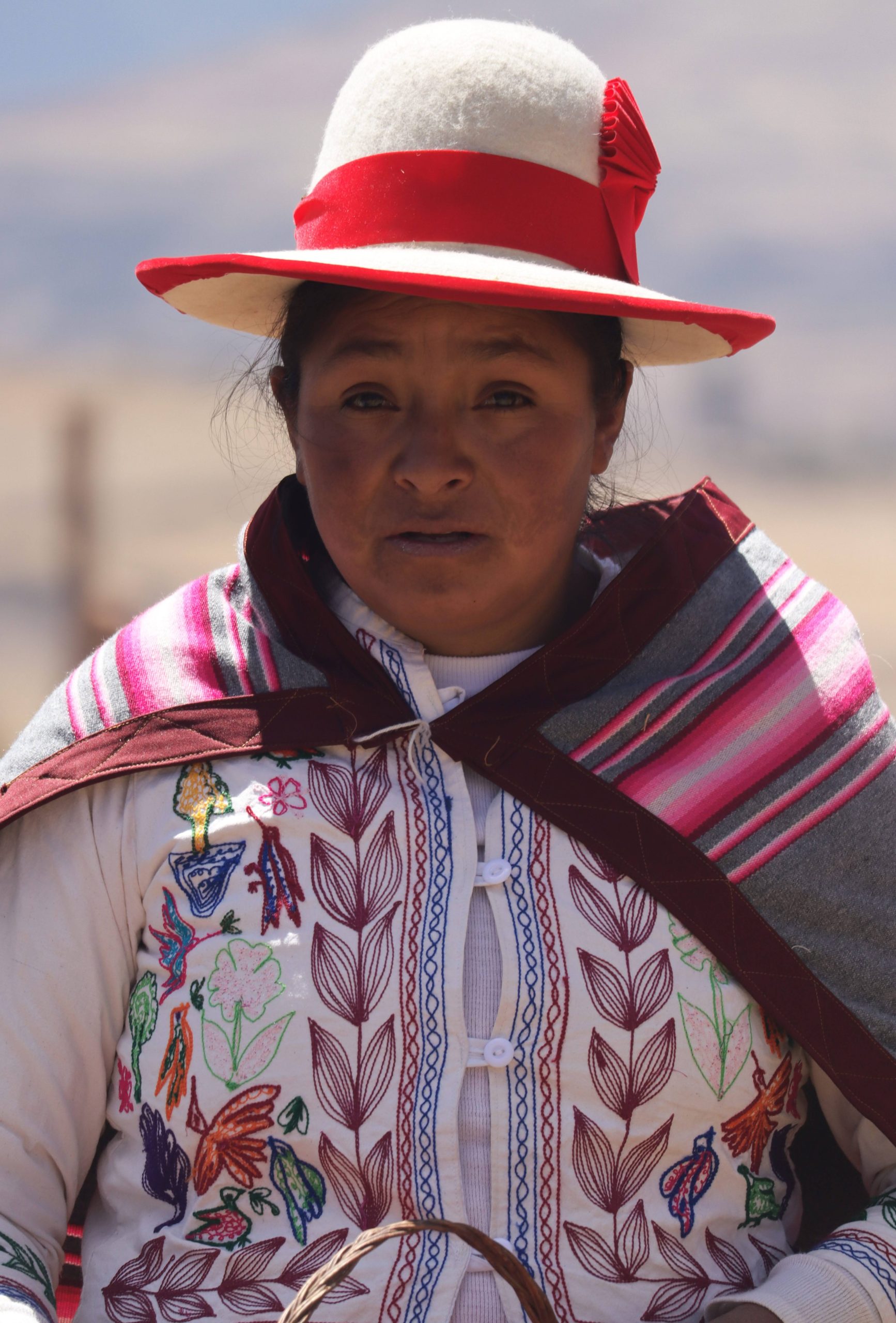
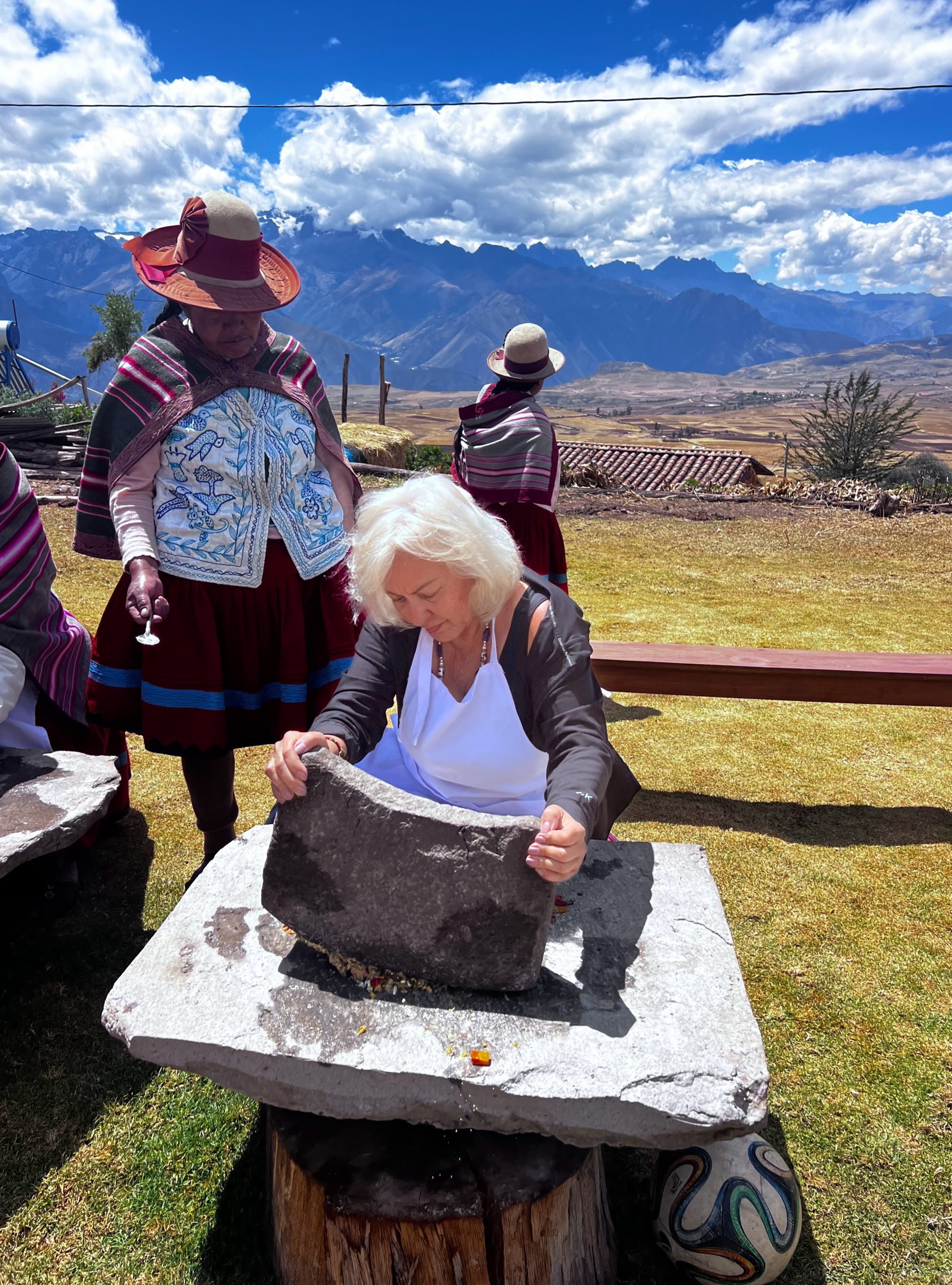
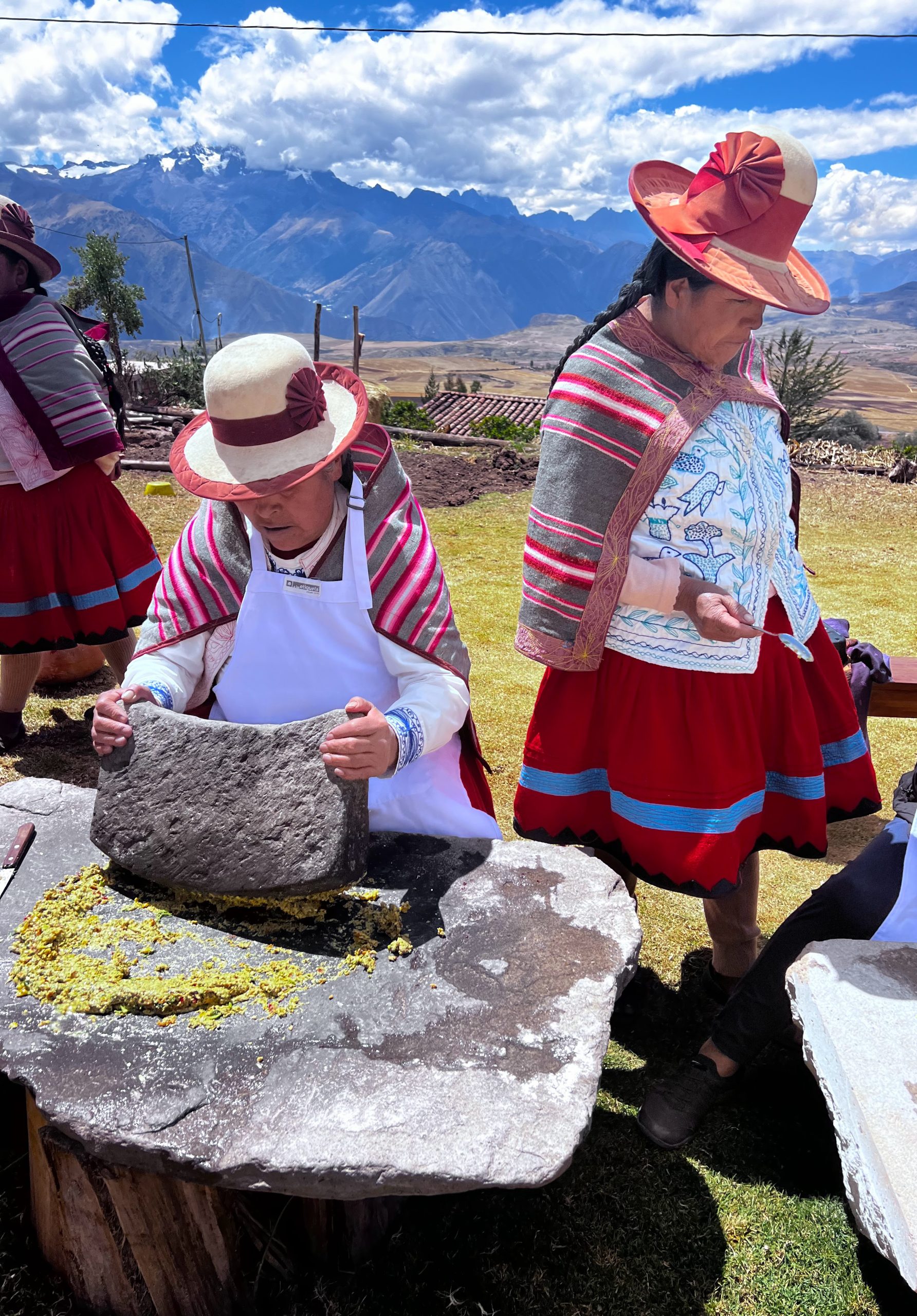
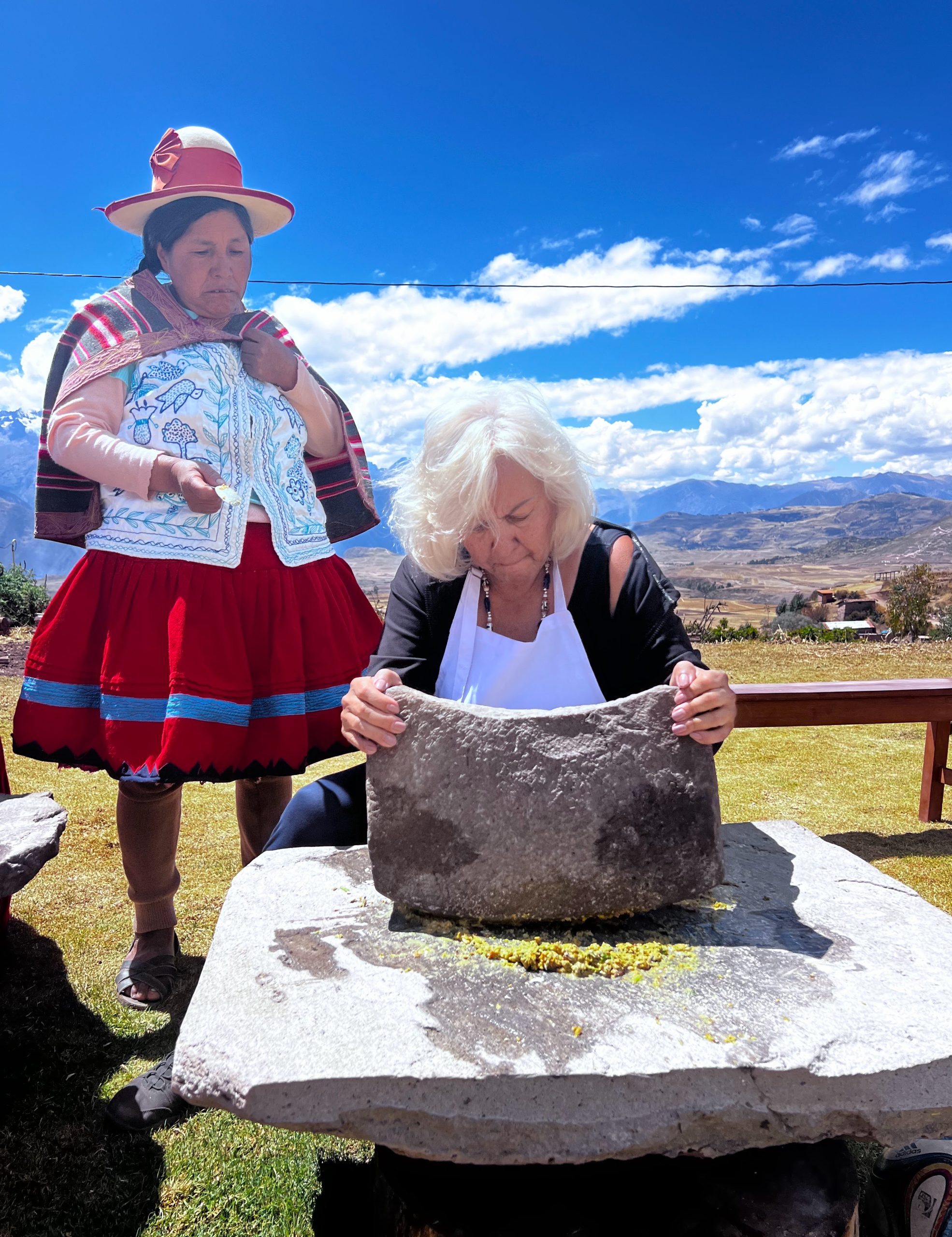
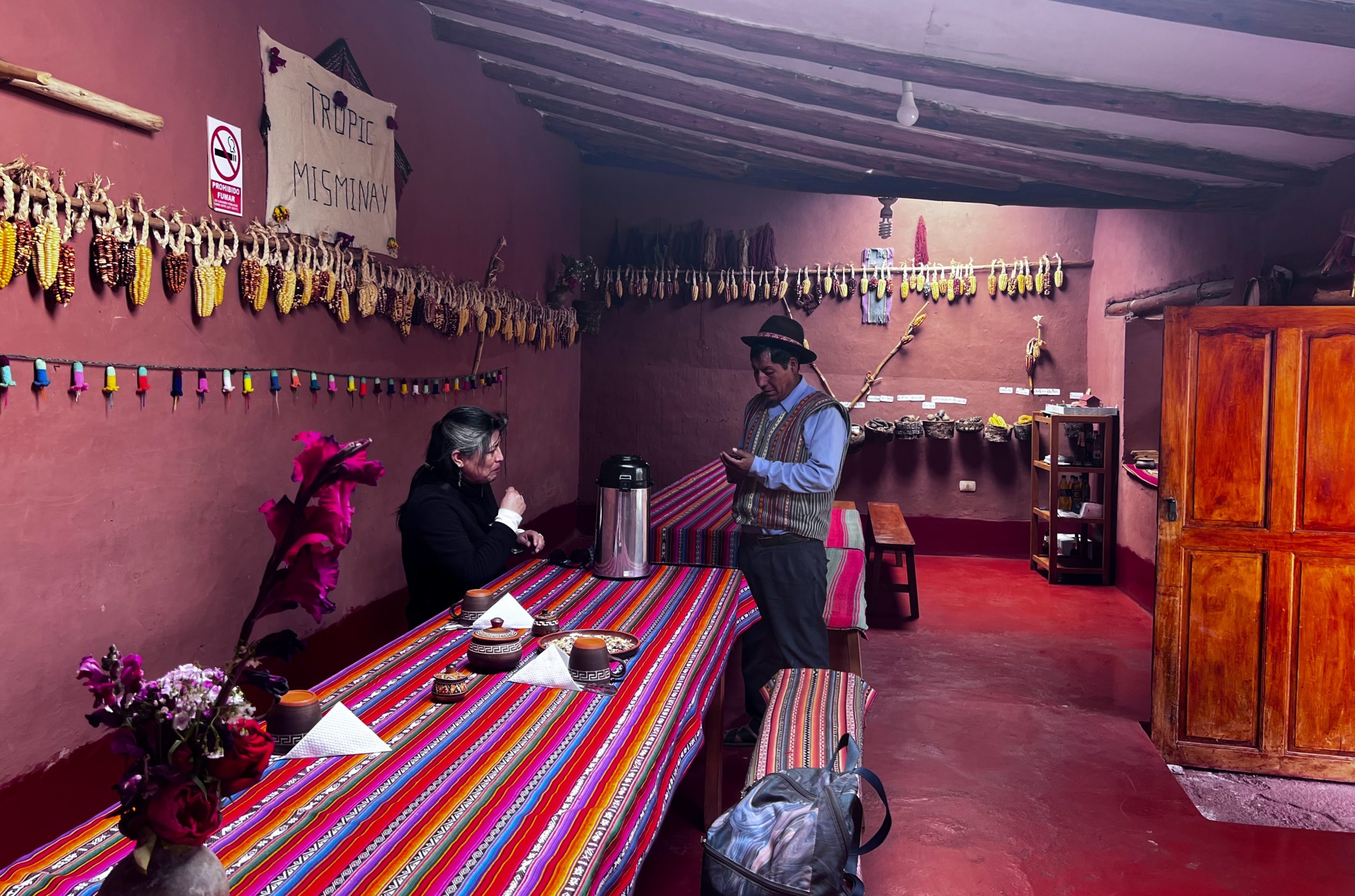
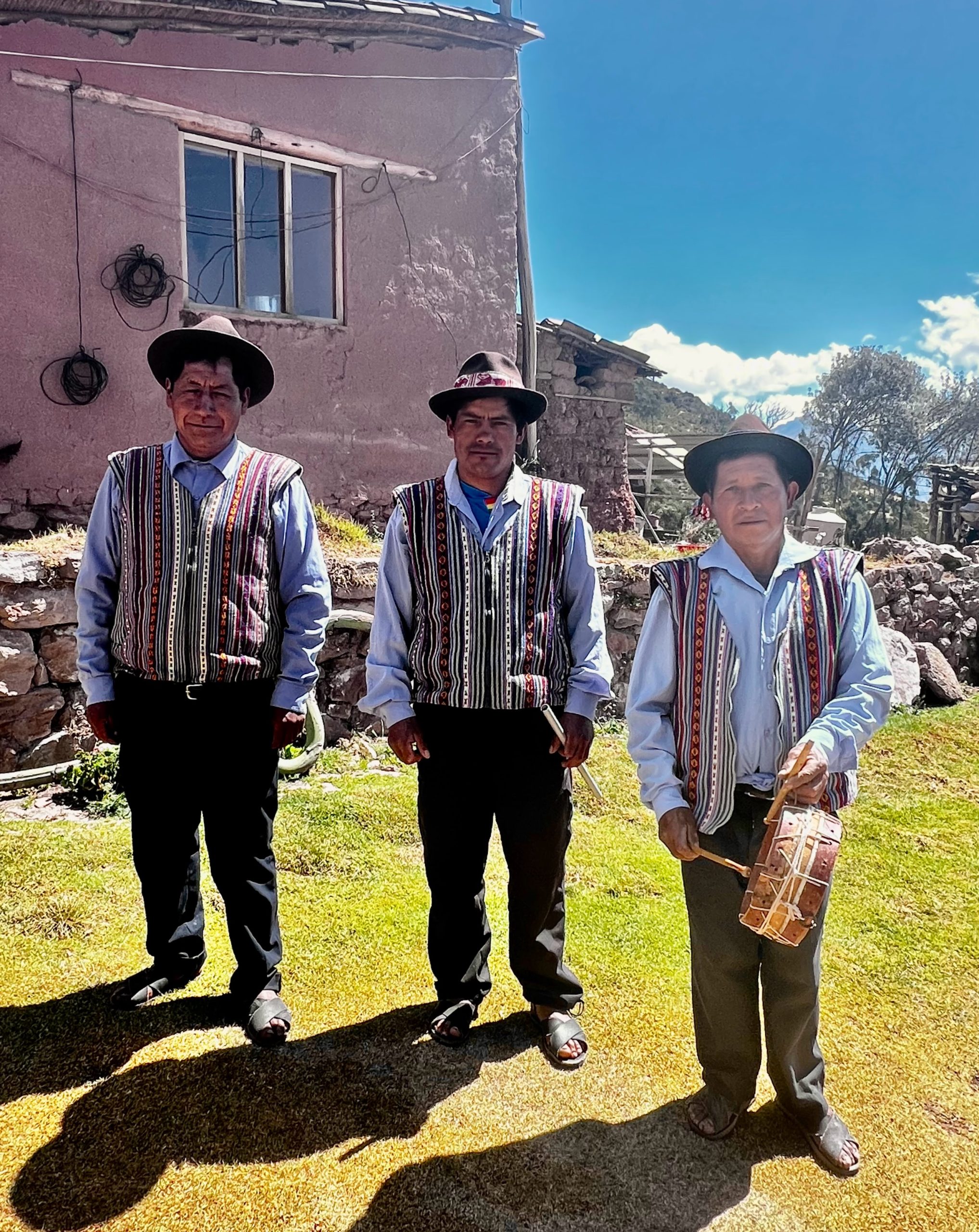
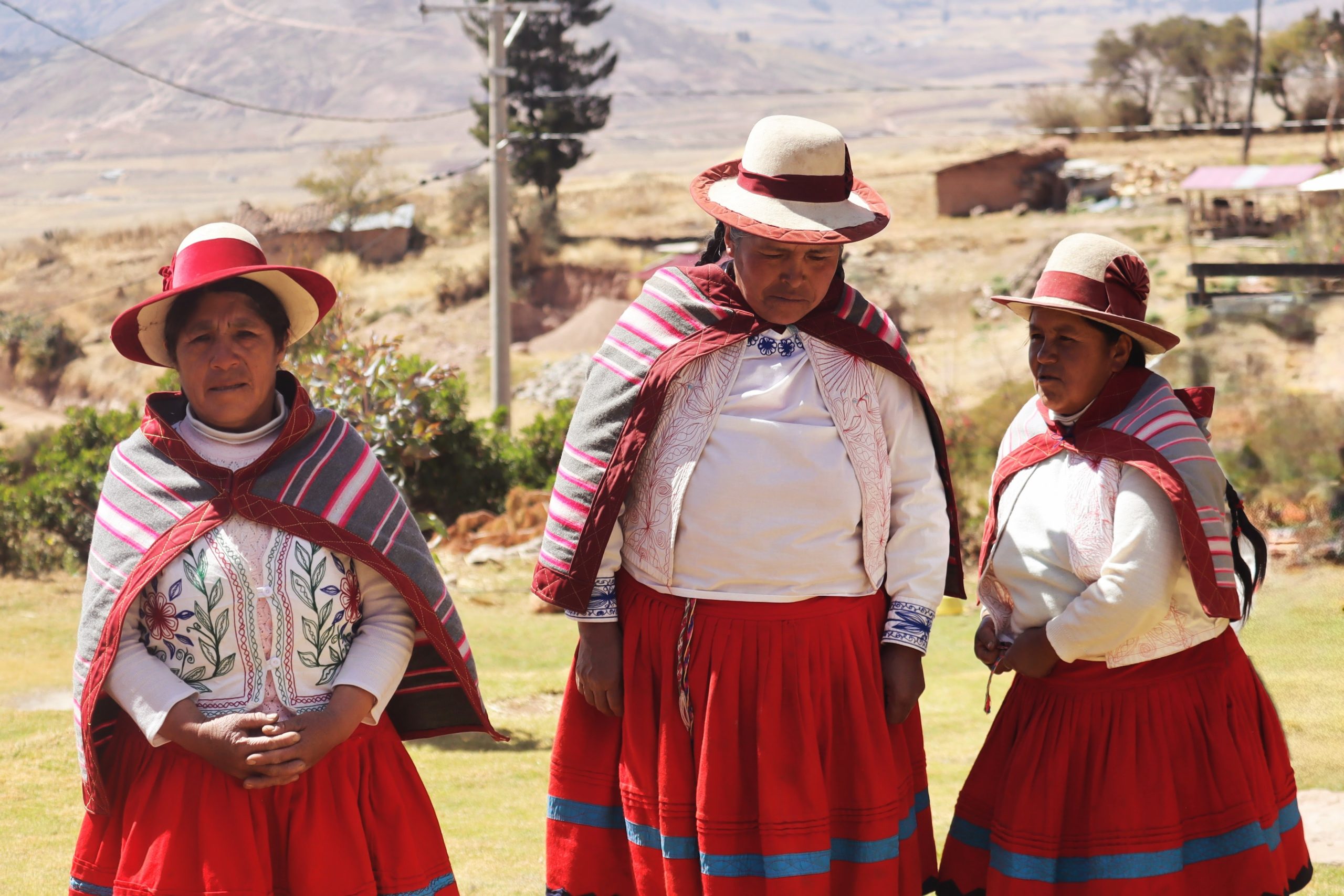
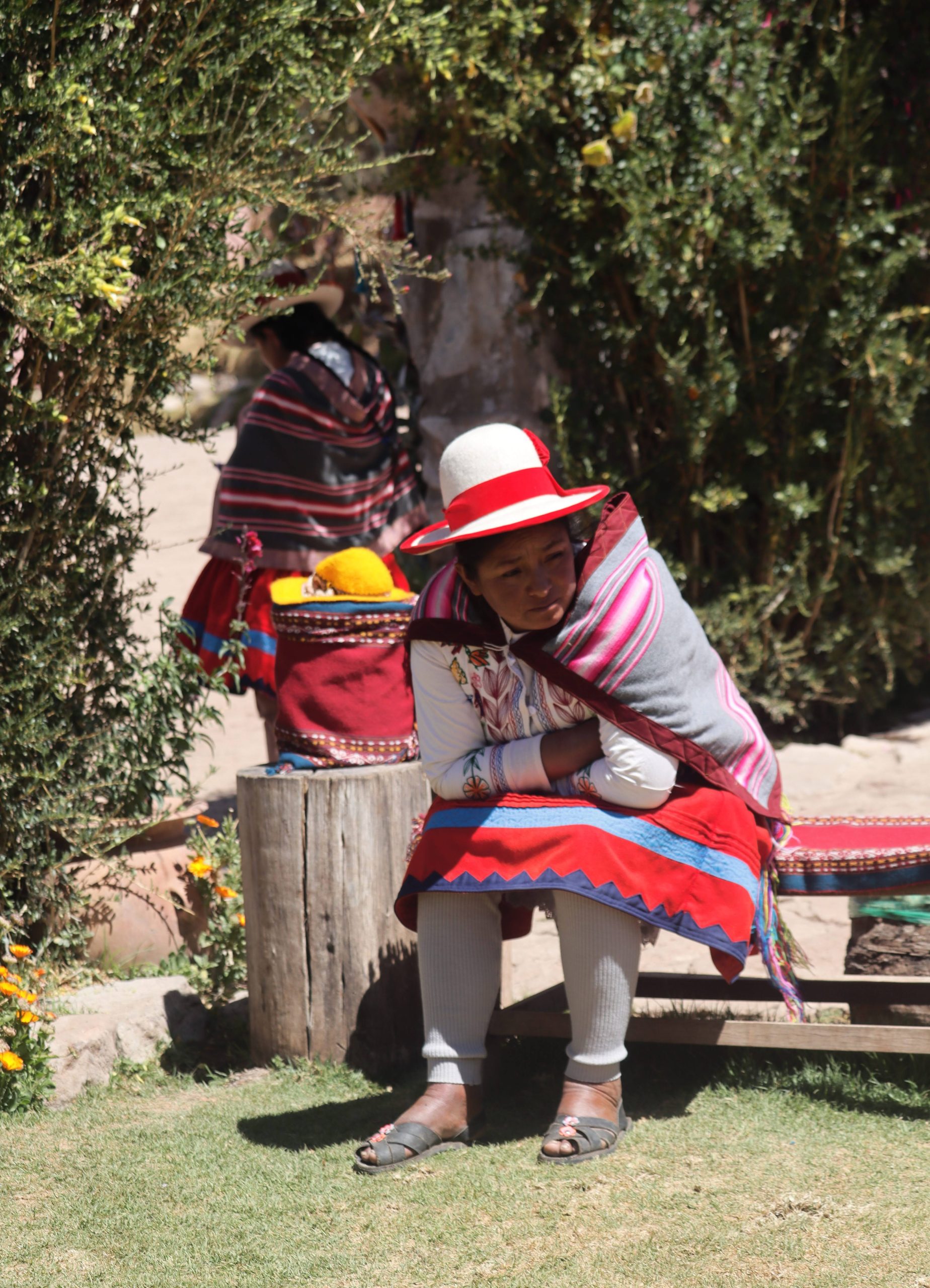
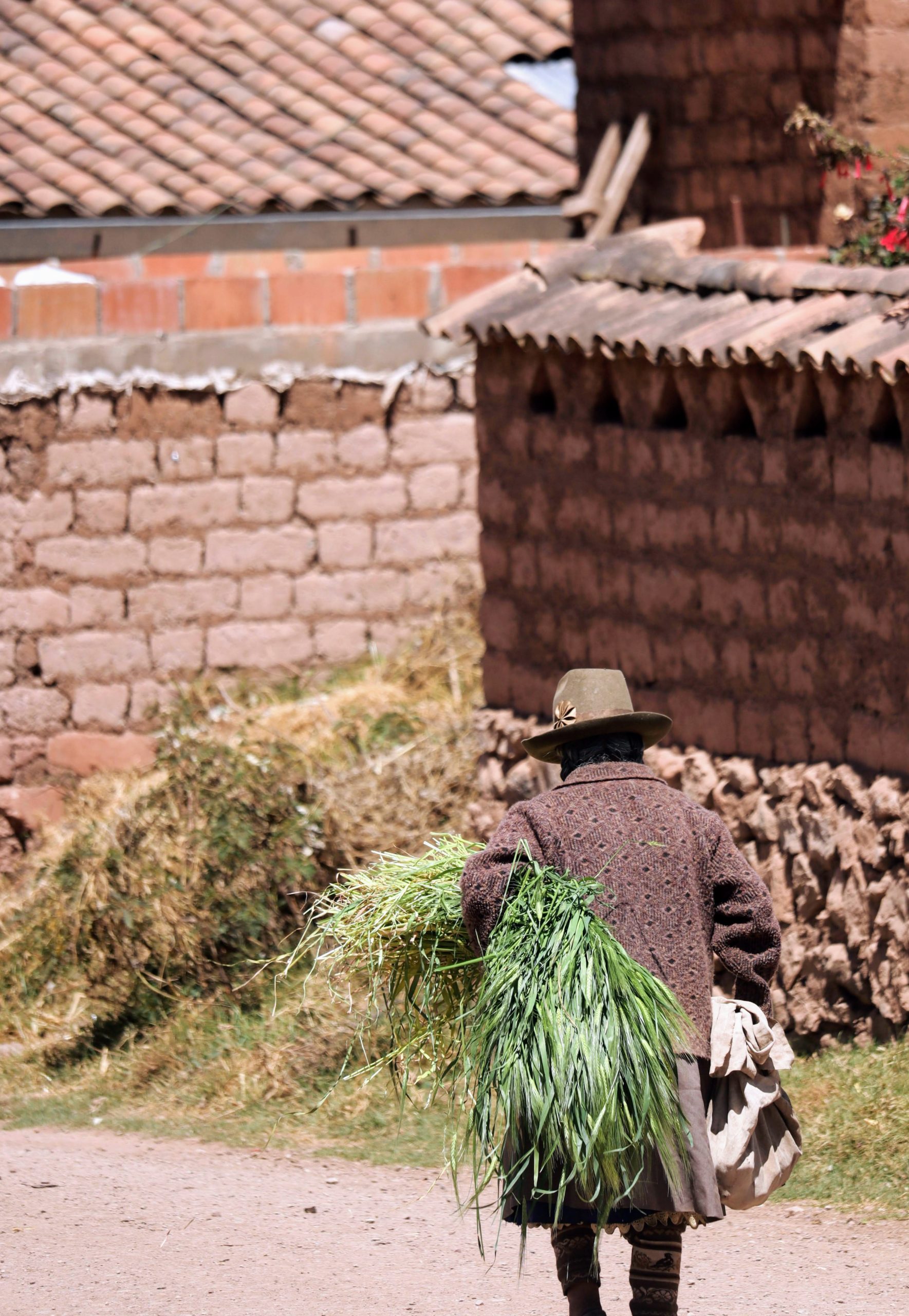
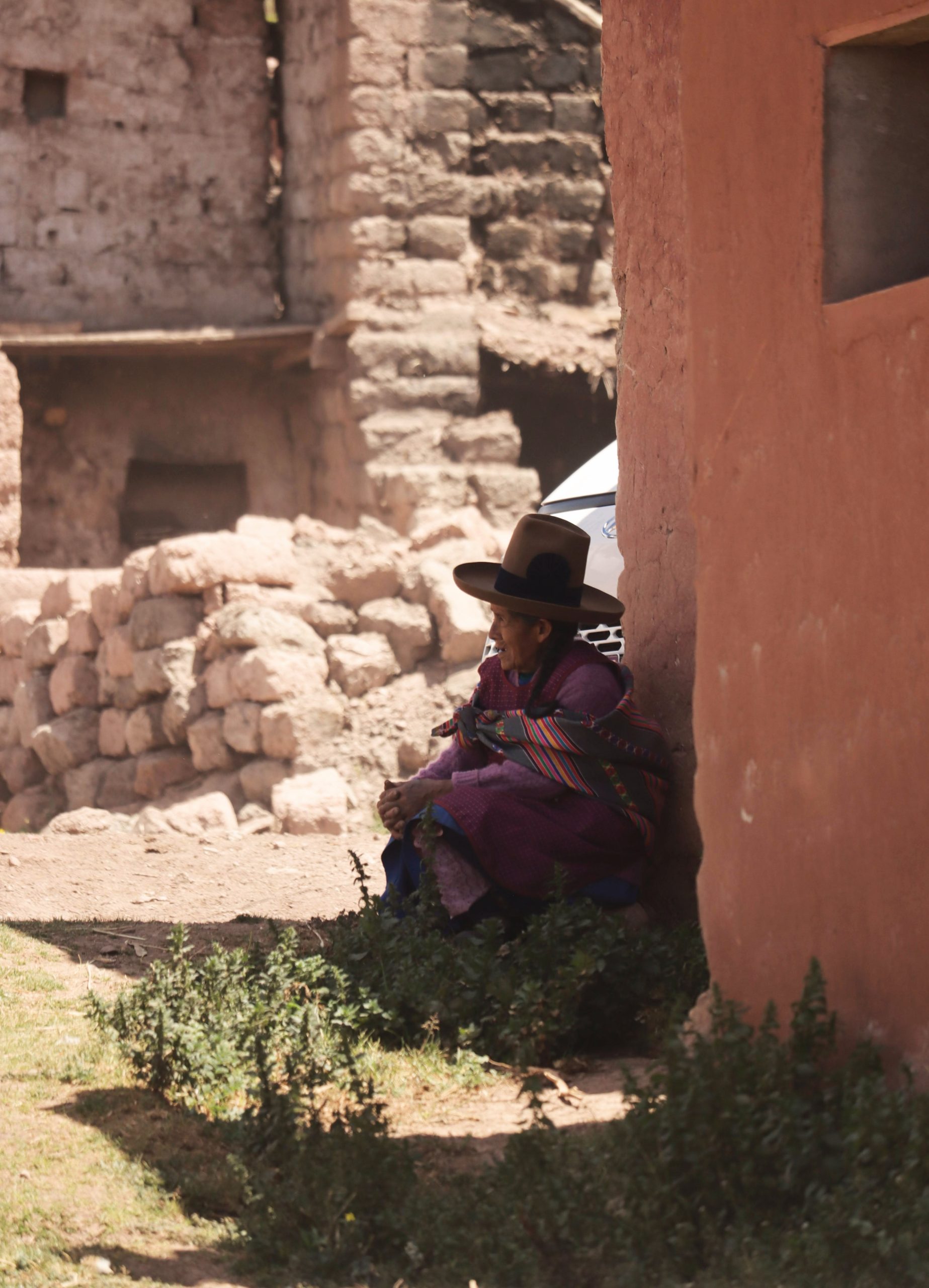
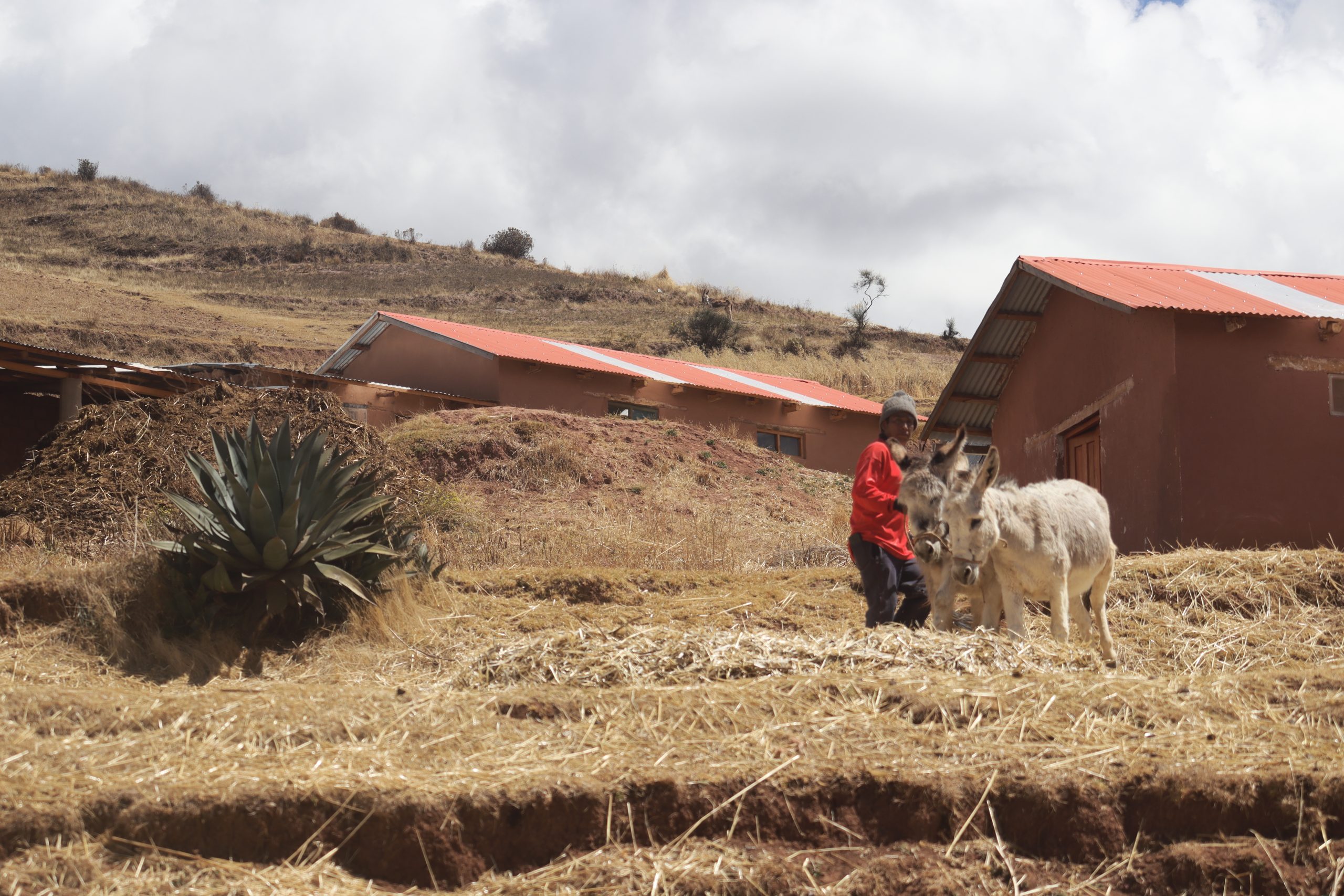
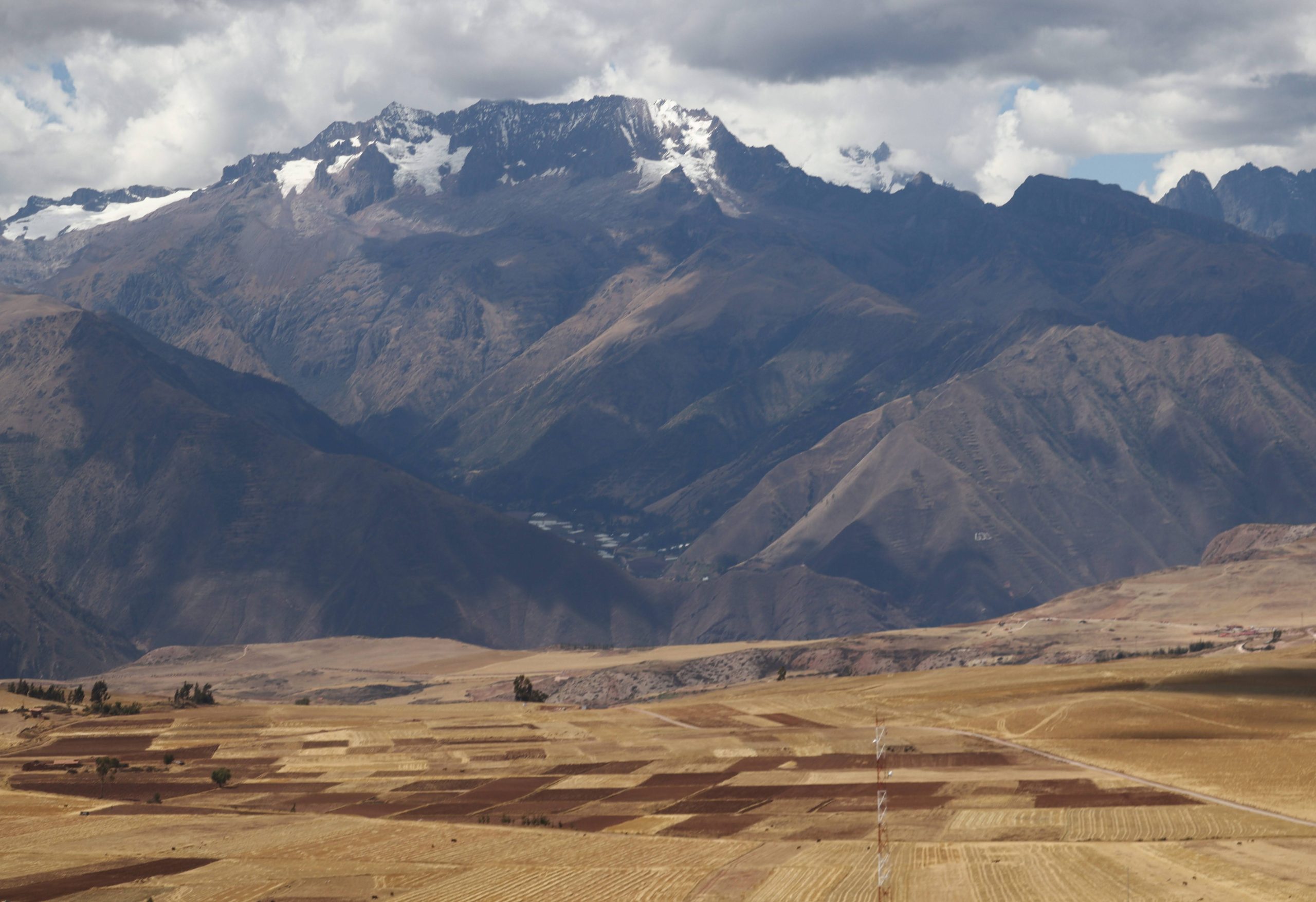
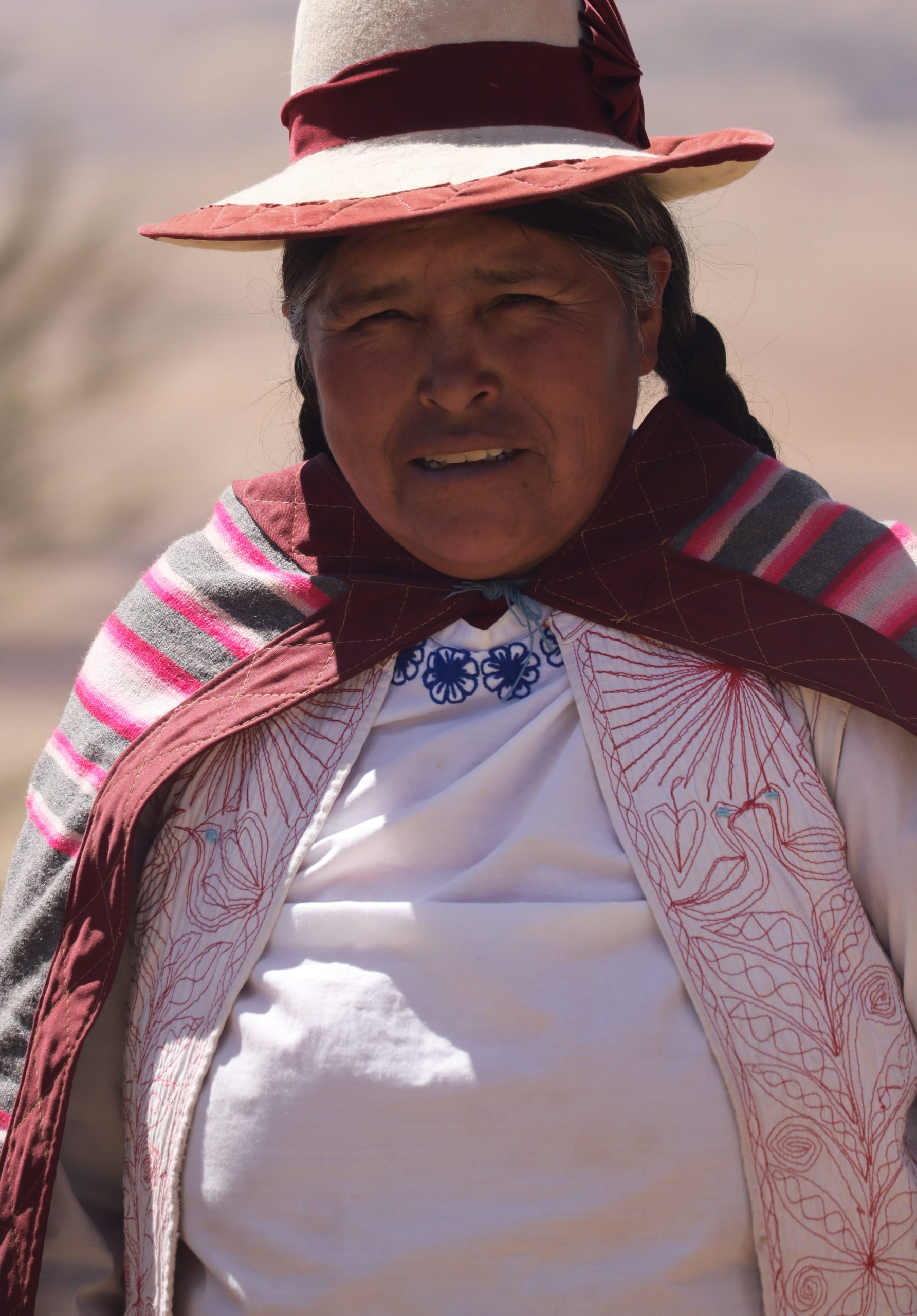
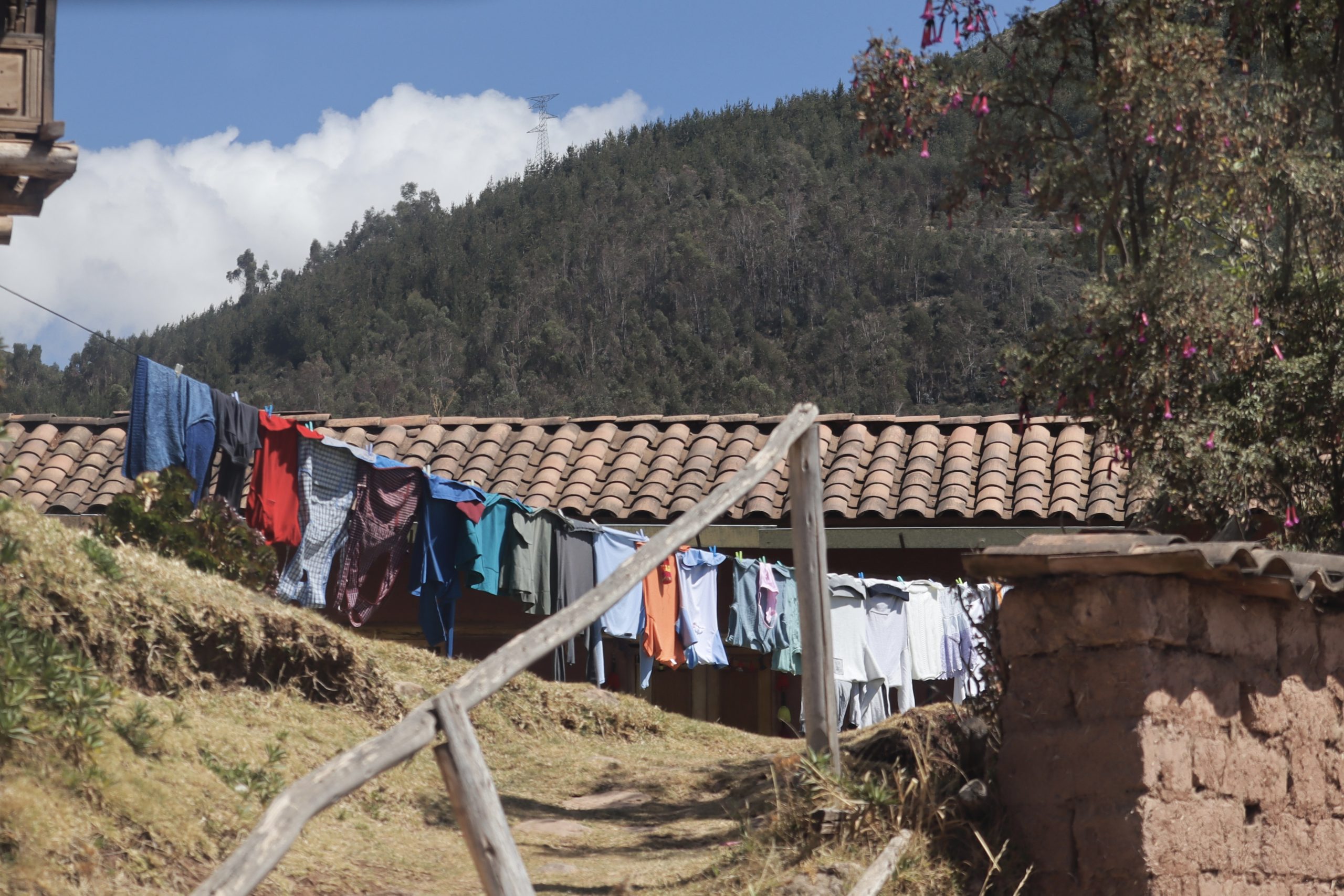
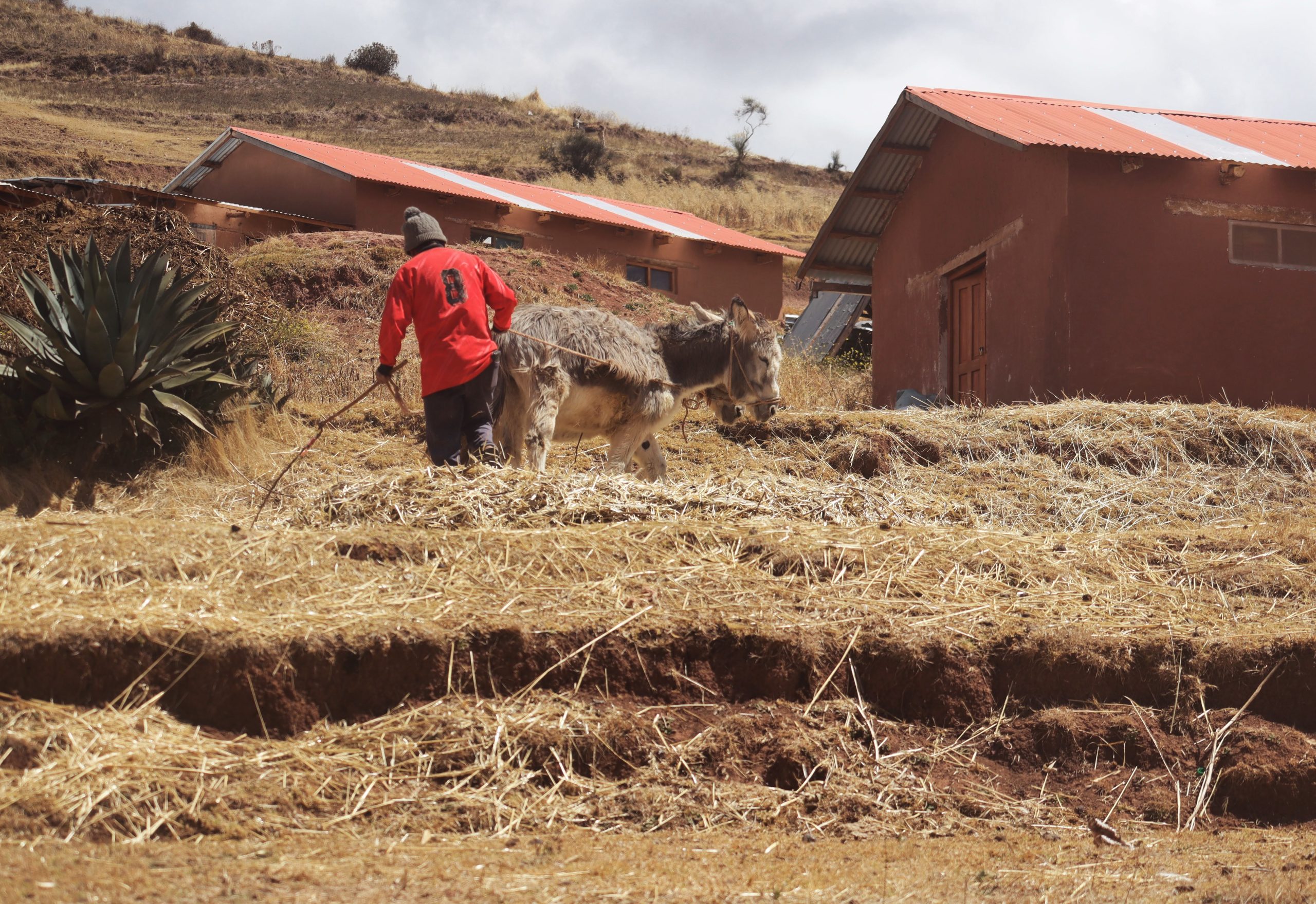
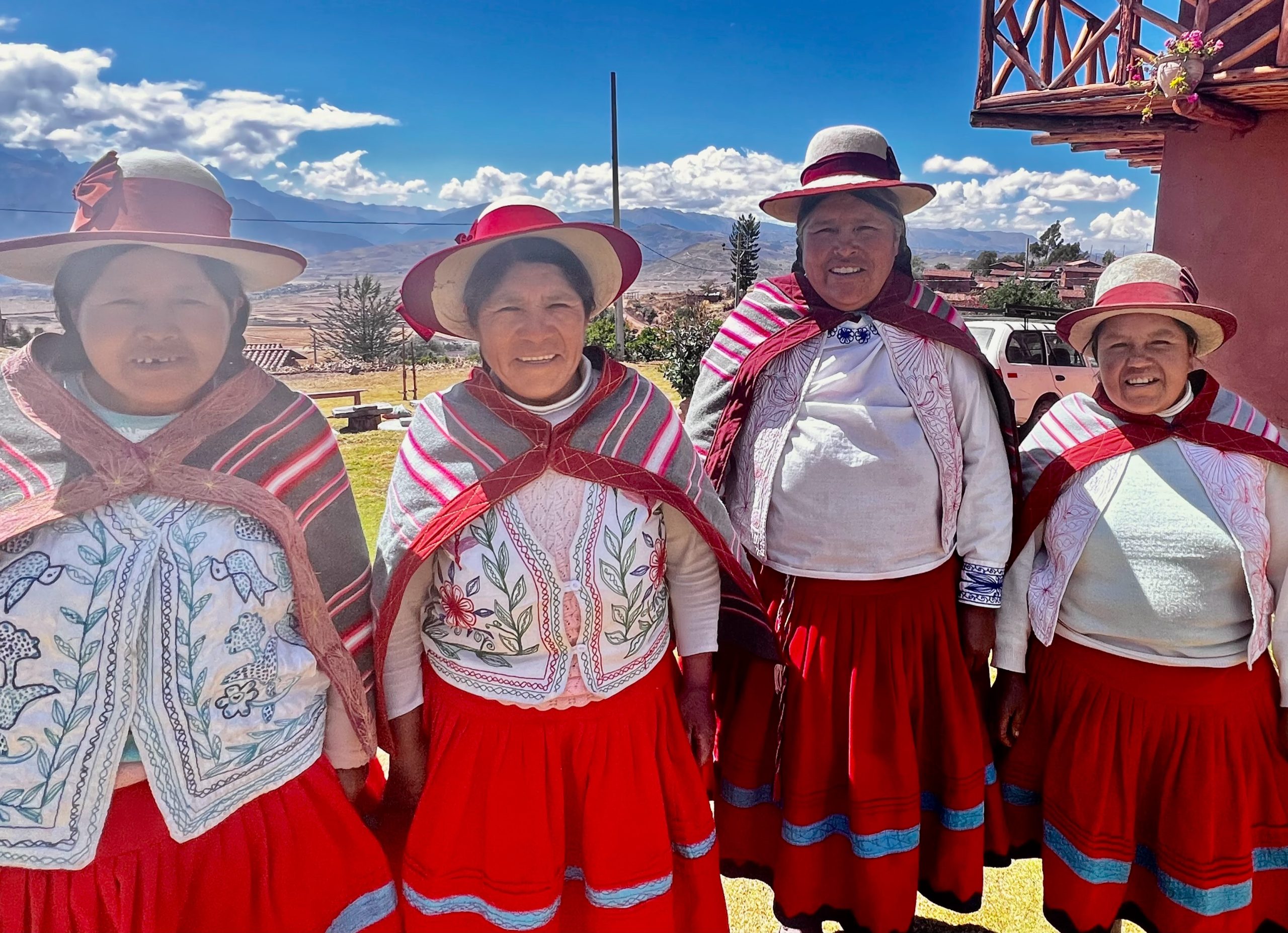
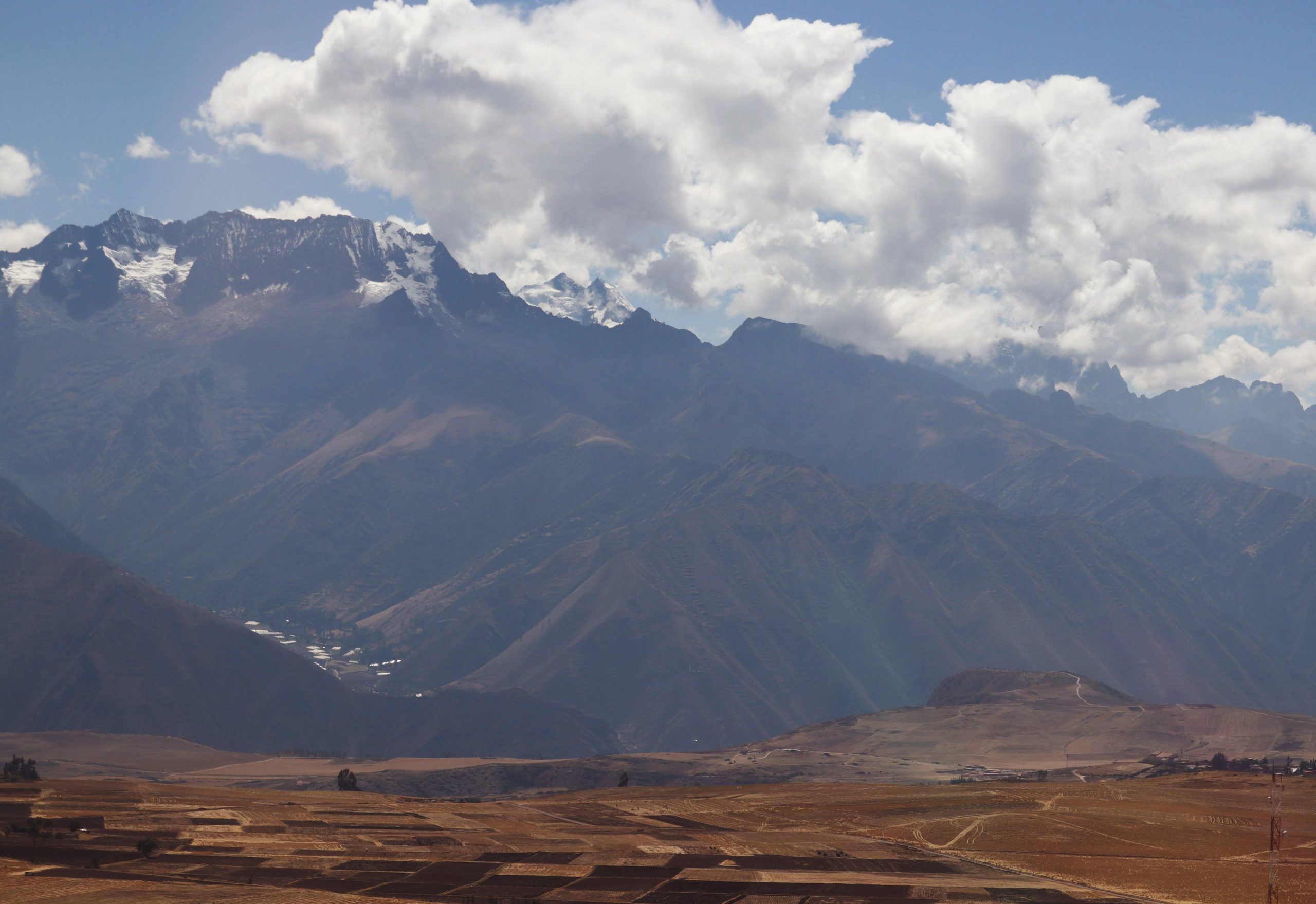
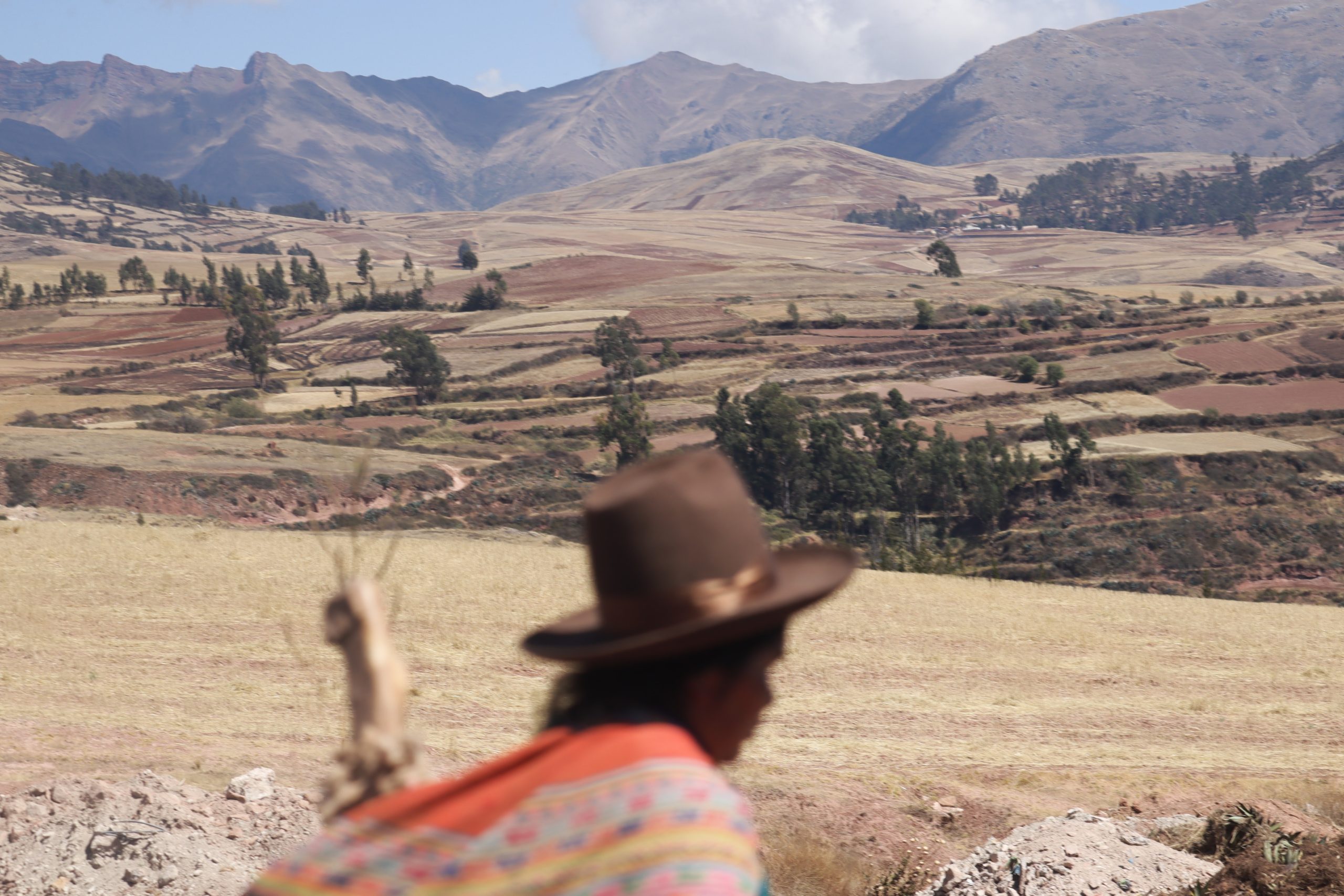
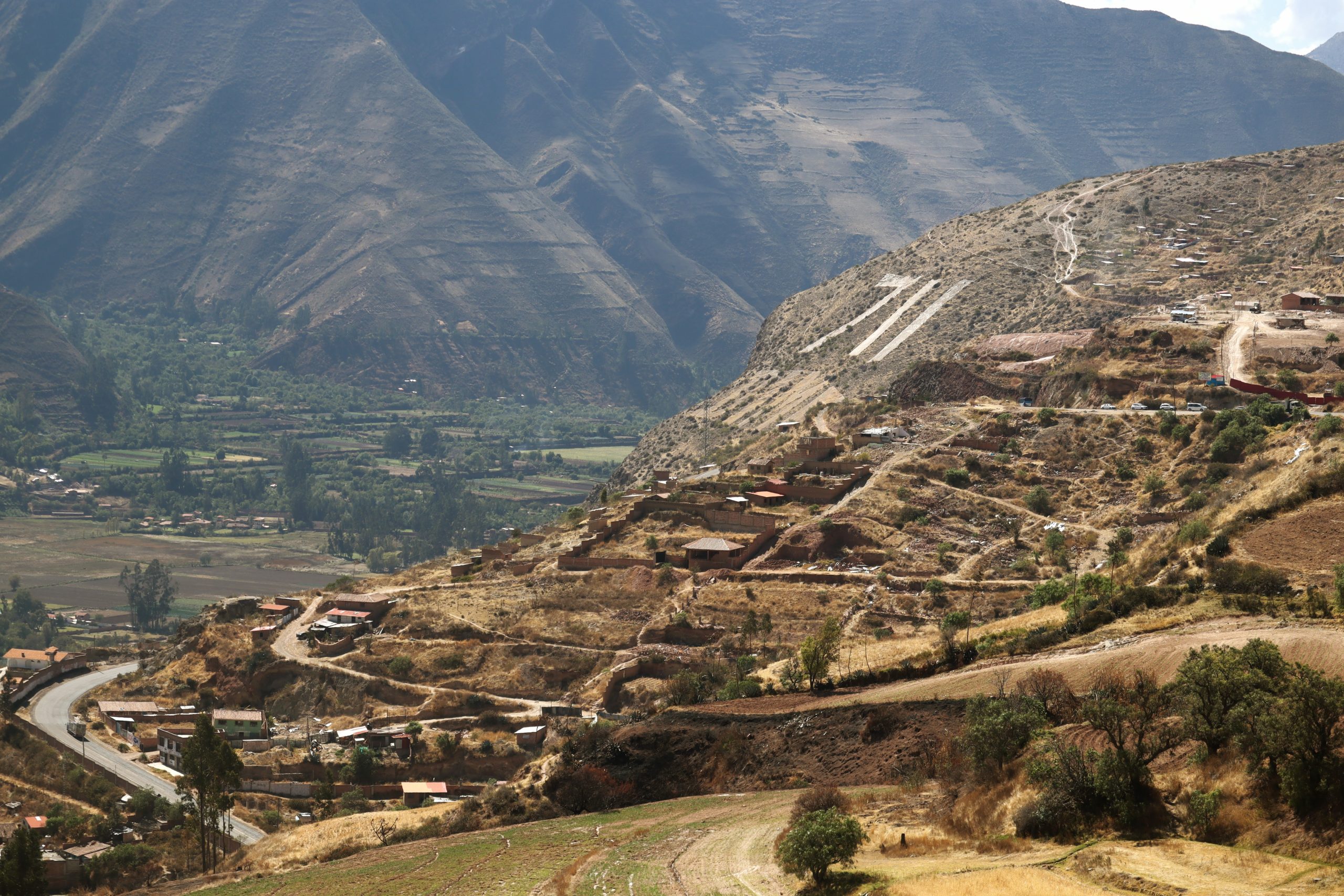
During my stay in Peru, on my way to Machu Picchu, I had the opportunity to visit another indigenous community known as the Misminay situated in the Valle Sagrado (Sacred Valley), 12,000 feet above sea level. This primarily agricultural community is known for preserving ancestral customs both in agriculture and in weaving. I spent some time learning their traditional techniques, helping make a sauce for our lunch, and taking part in one of their agricultural rituals. As expected, the Misminay community is facing a series of challenges as it remains committed to its ancestral traditions. This story sheds light on who they are, along with their endurance and resilience ….
But First a Bit of History
The Misminay people are mostly an Andean farming community whose lifestyles are rooted in pre-Hispanic Andean agricultural systems (terrace farming)and are part of the larger Quechua community. The Quechua people are indigenous to the Andes Mountains of South America, with their largest populations in Peru, Bolivia, and Ecuador. They are descendants of the Inca civilization and continue to speak their native language. In my recent story regarding the Uro People of Peru (click here), they too are part Quechua and Aymara, both descendants of the Inca civilization. The Misminay are mostly in Valle Sagrado and represent a community of between 120- 300 residents. The gathering of demographic data in this region is far from being a science. Also, as with many ancestral indigenous groups, they are losing their population to modernization (more on this later).
Visiting the Misminay
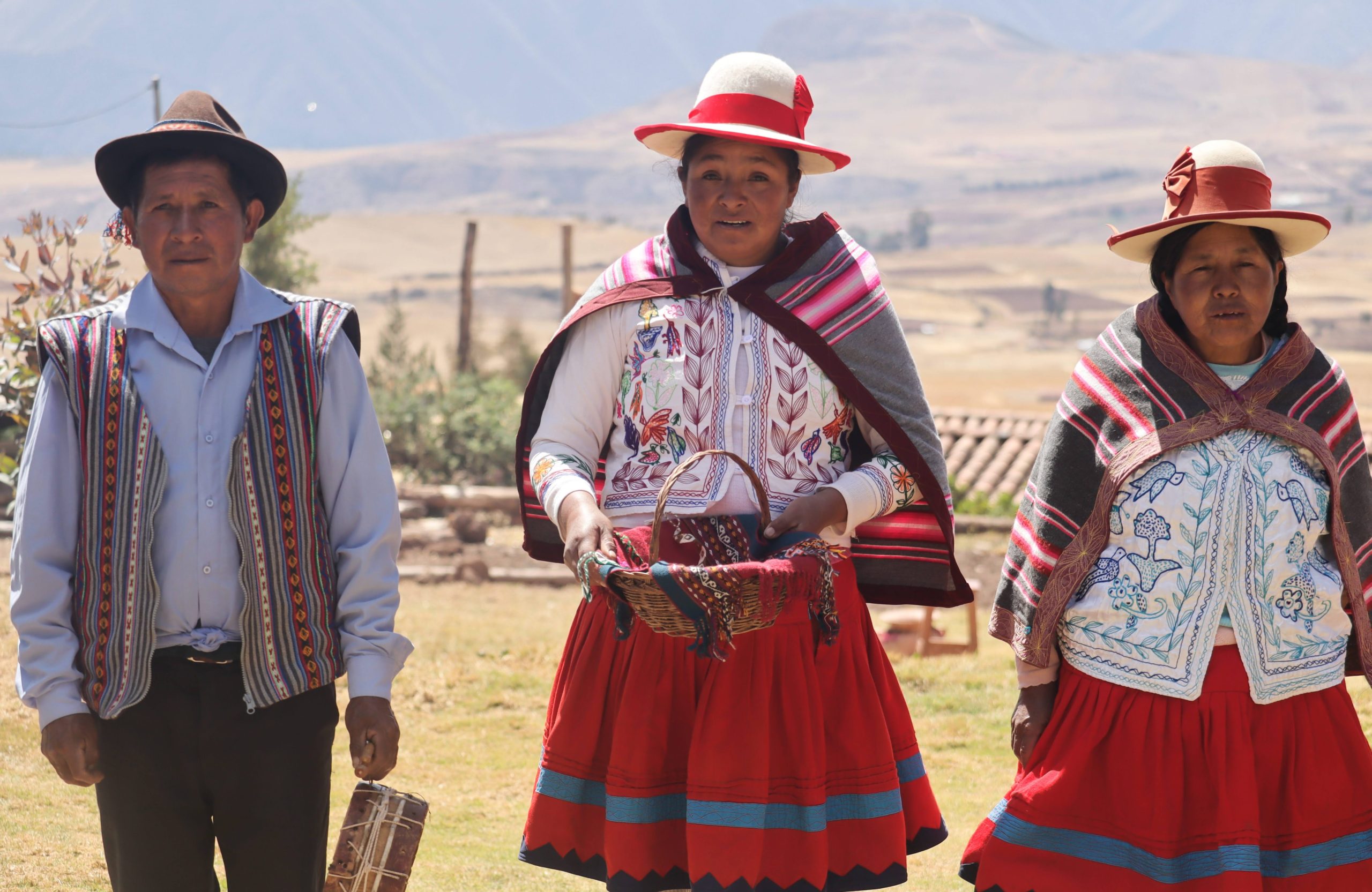
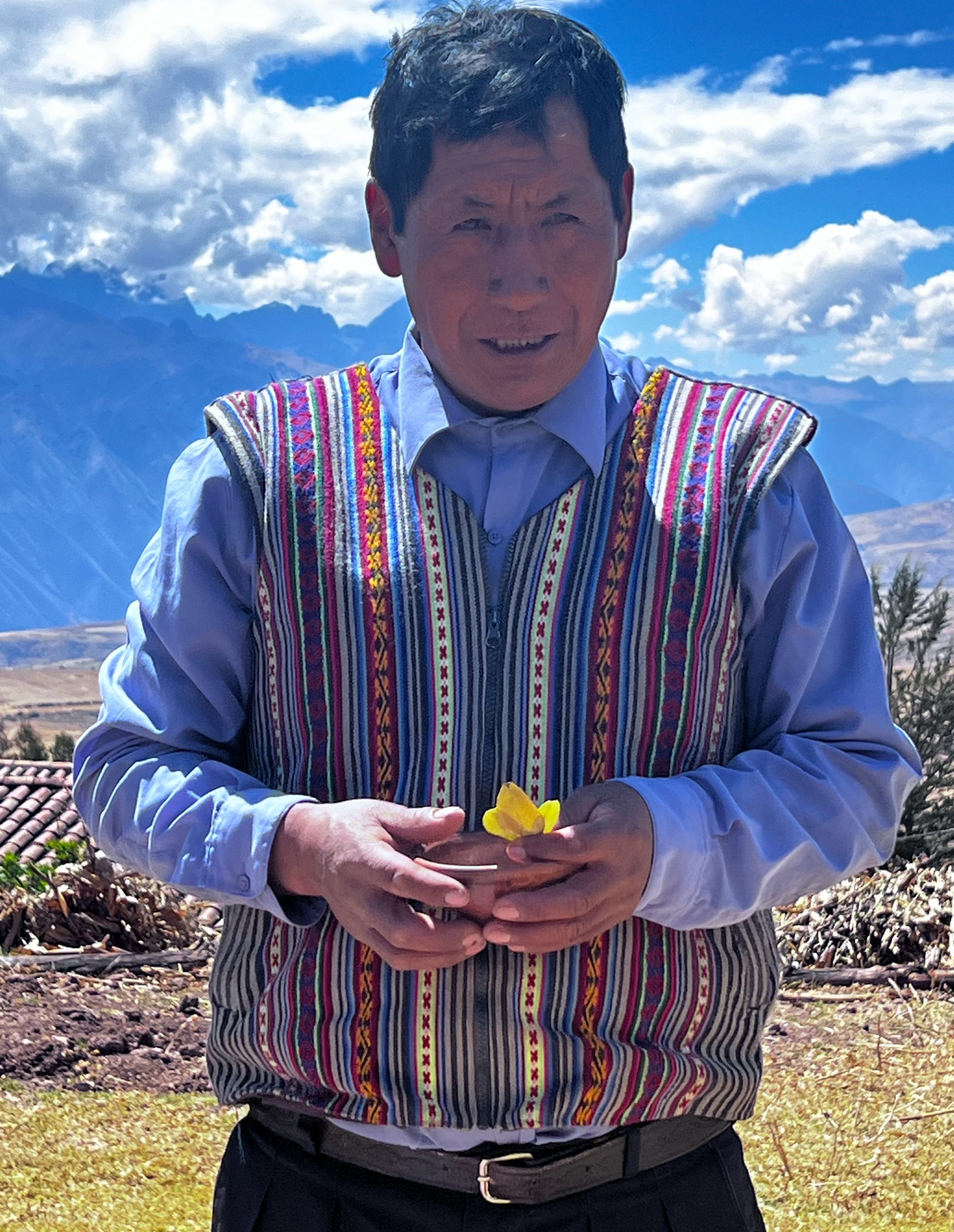
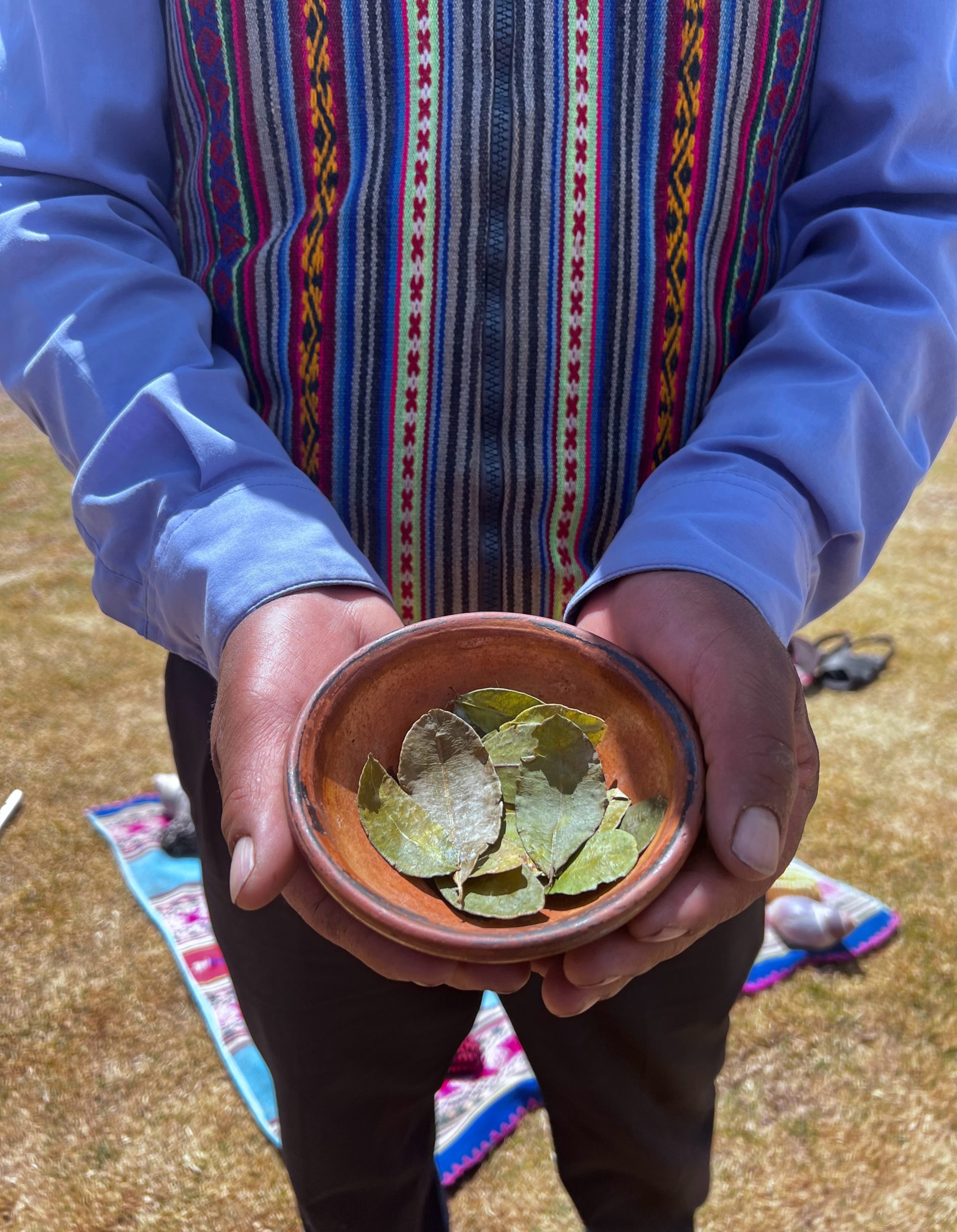
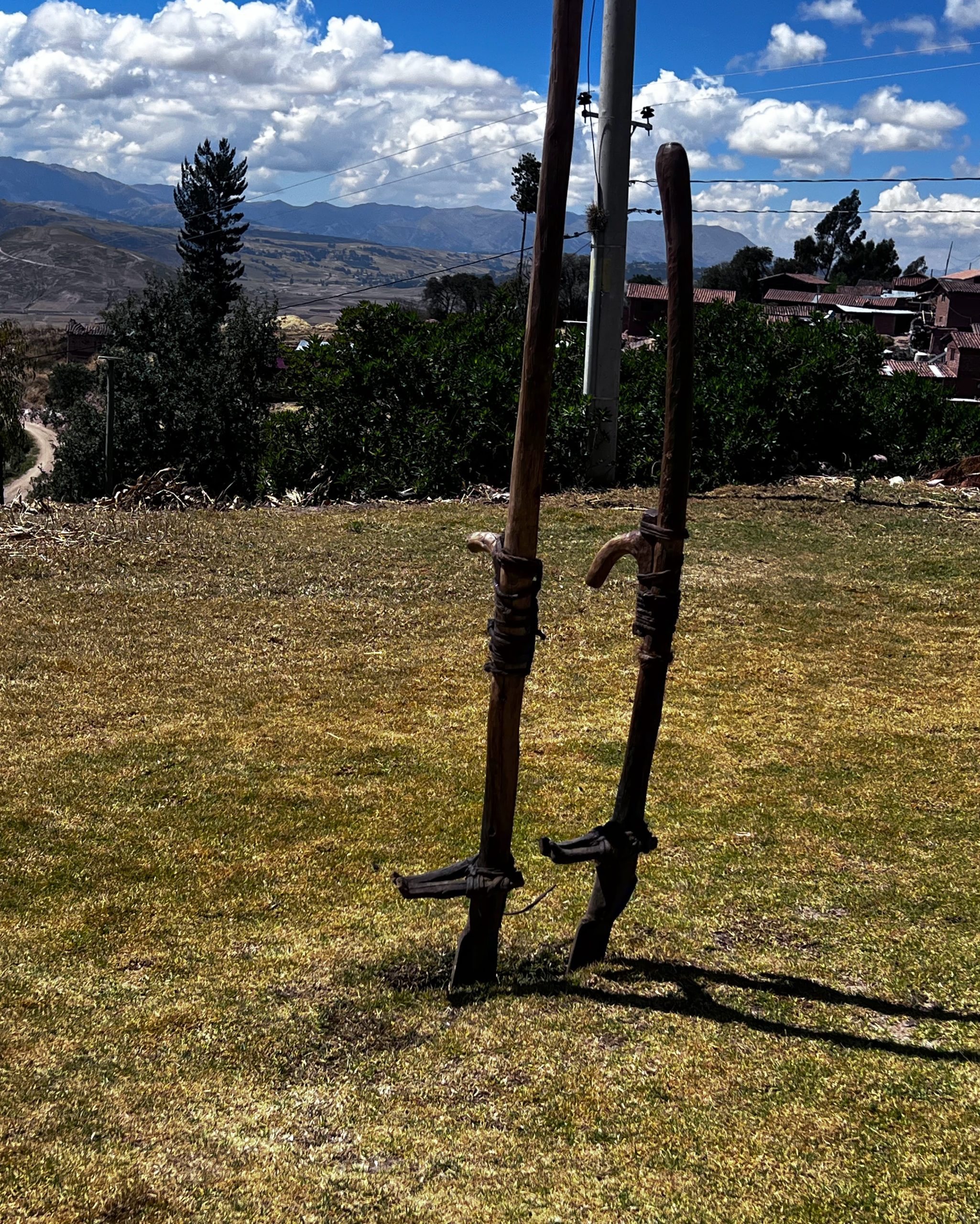
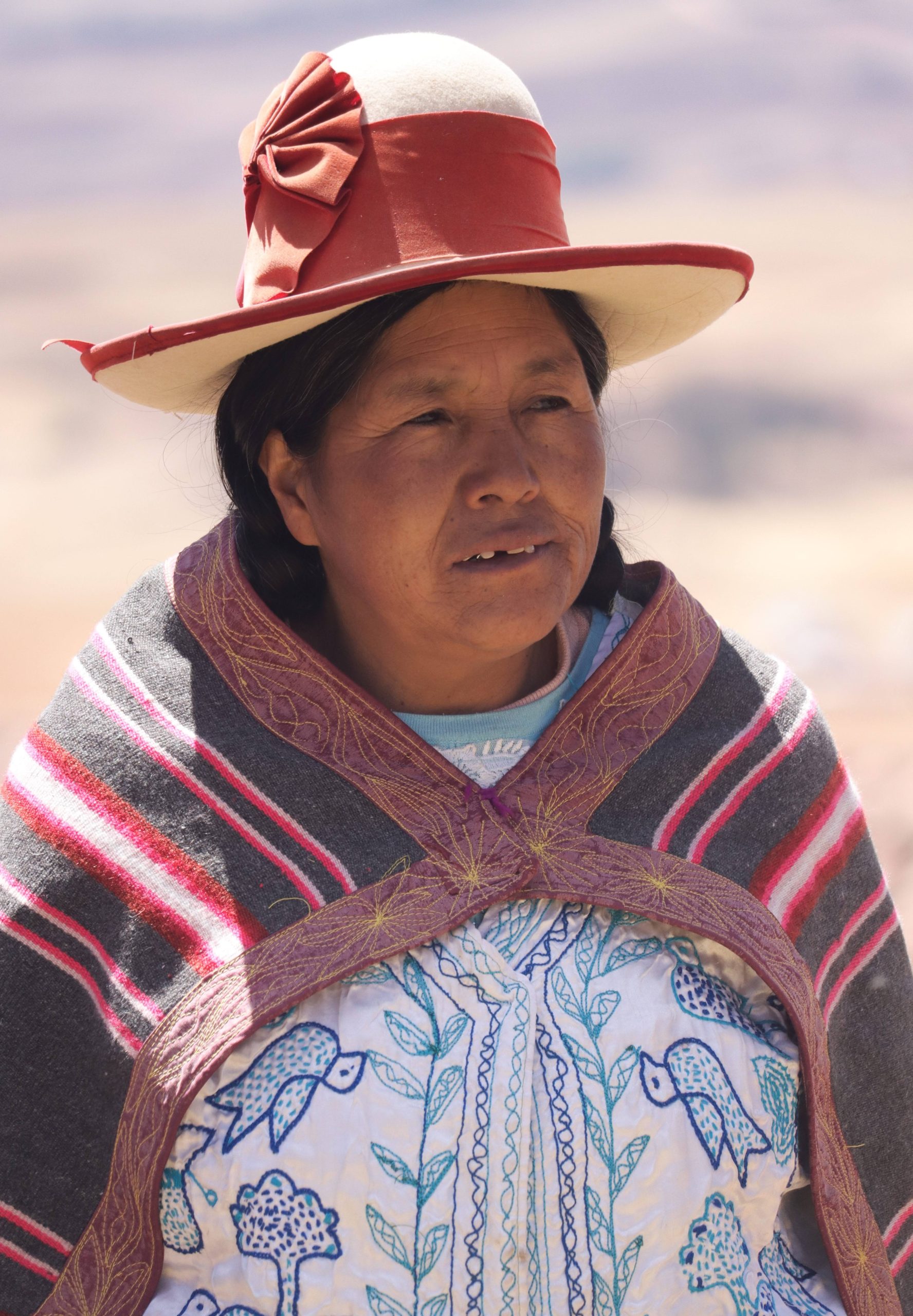
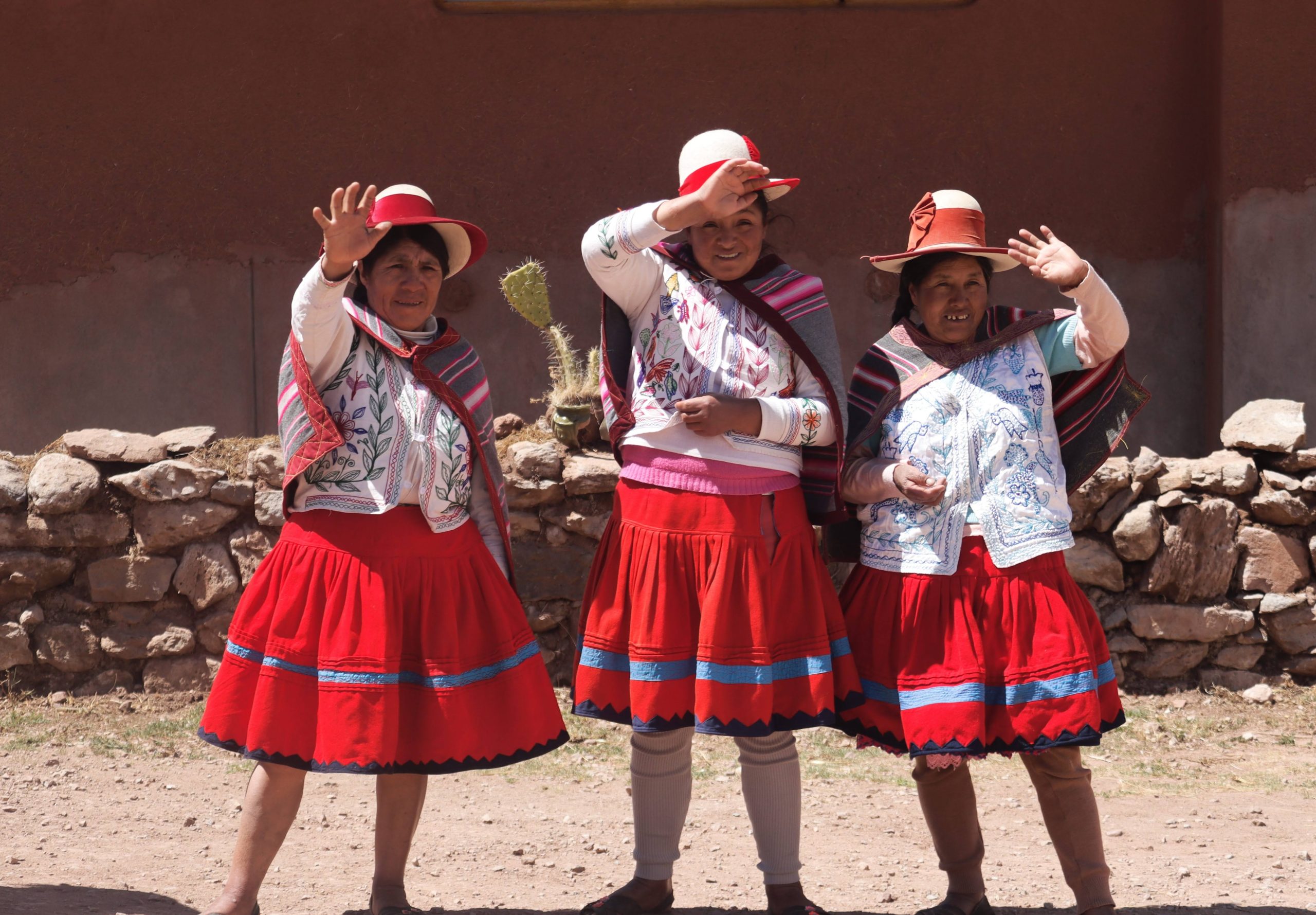
As someone who has an interest in learning about indigenous communities, I was excited to add this to my tour. “Experiential tourism” has become an important income stream for indigenous communities to thrive while preserving their lifestyle. This was a half-day experience that included driving up 12,000 feet with spectacular scenic views of the Andes. Once you arrive at their community center, you are greeted by several women dressed in traditional clothes who gifted me with a textile bracelet woven by them. I was introduced to one of their leaders along with my tour guide, who speaks Quechua. We learn about the use of traditional agricultural tools such as the “Chaquitaclla” and the “Yunta” as well as partake in the ritual offering to Pachamama (Mother Earth). Together we bless the land and the seeds before planting them in the ground.
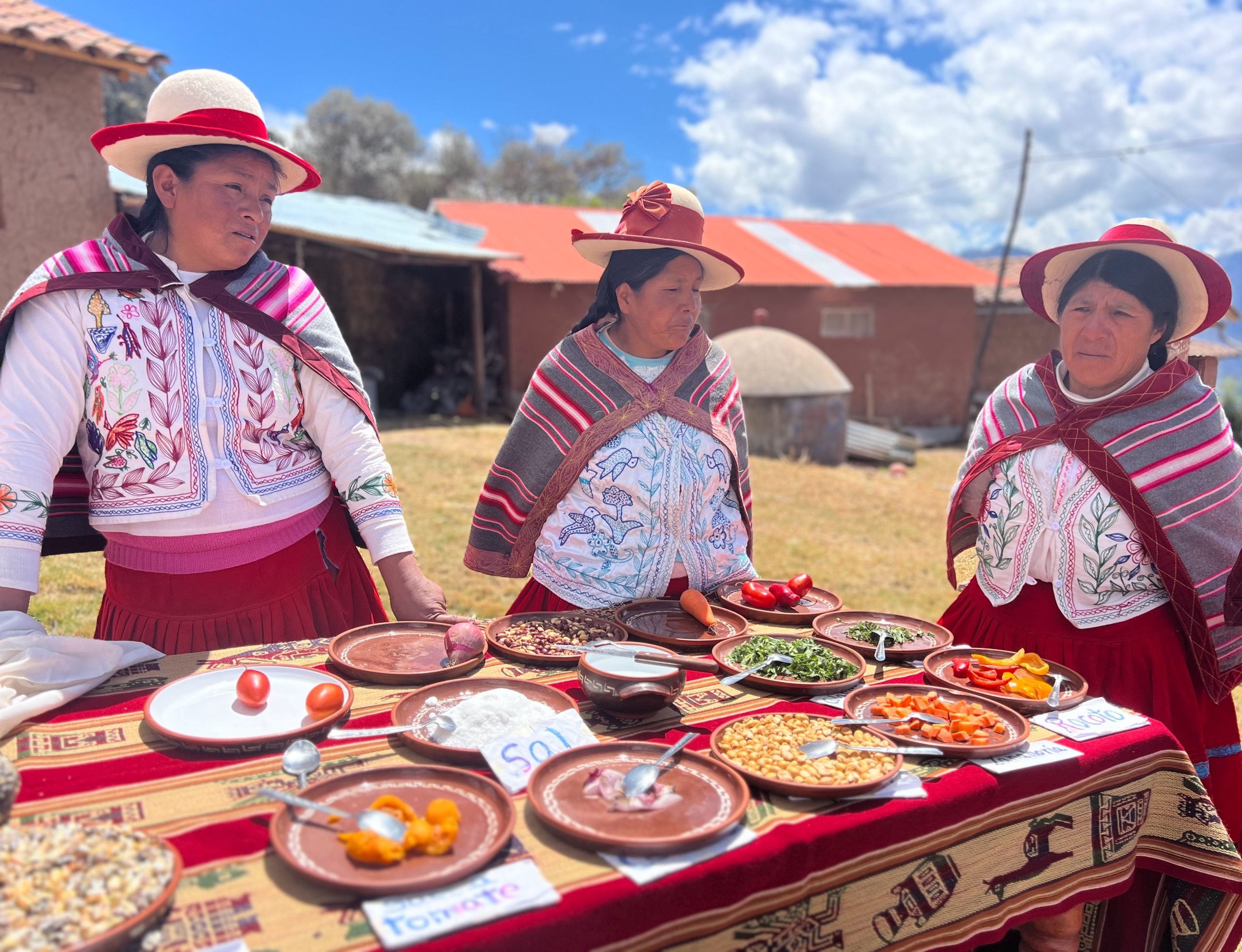
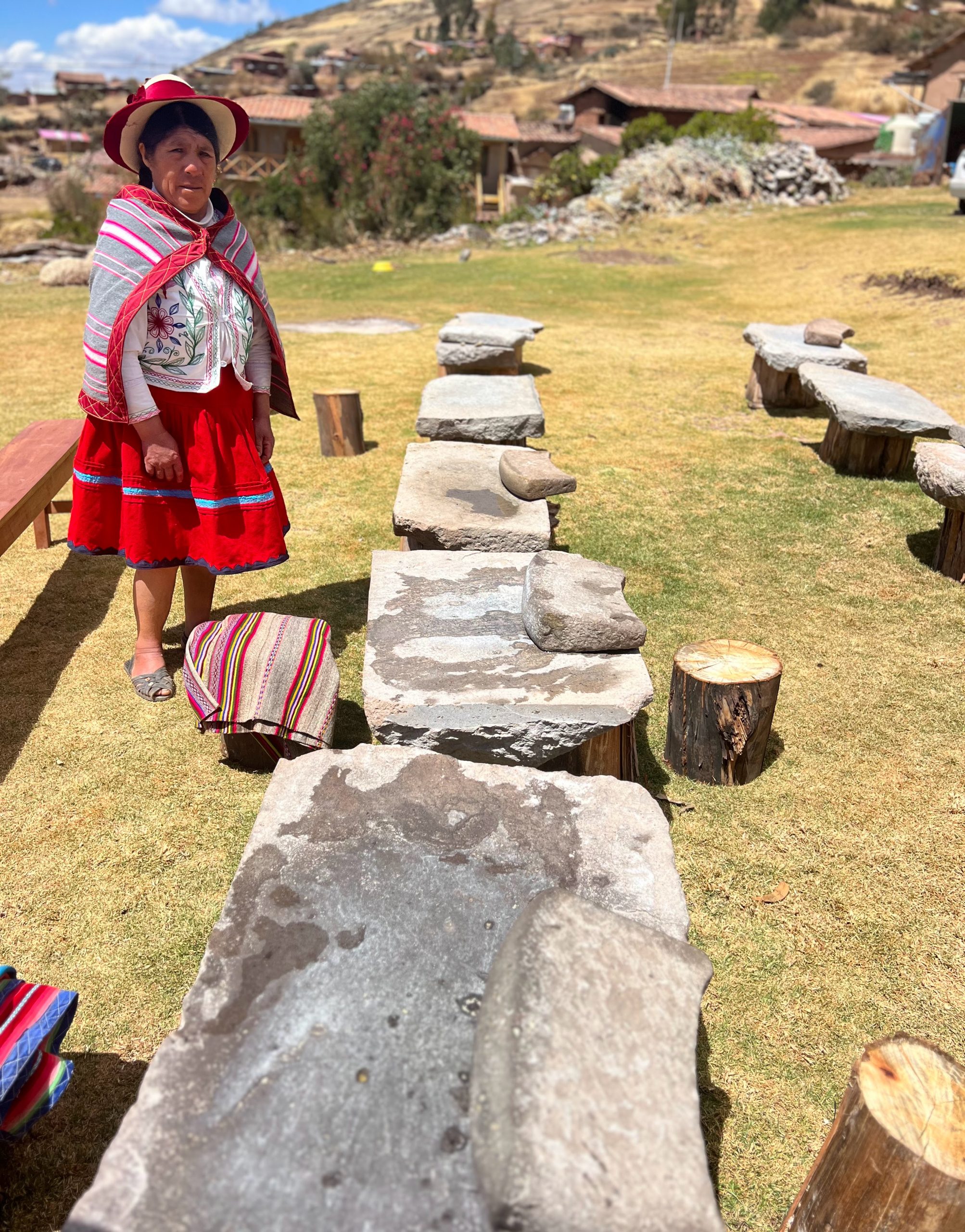
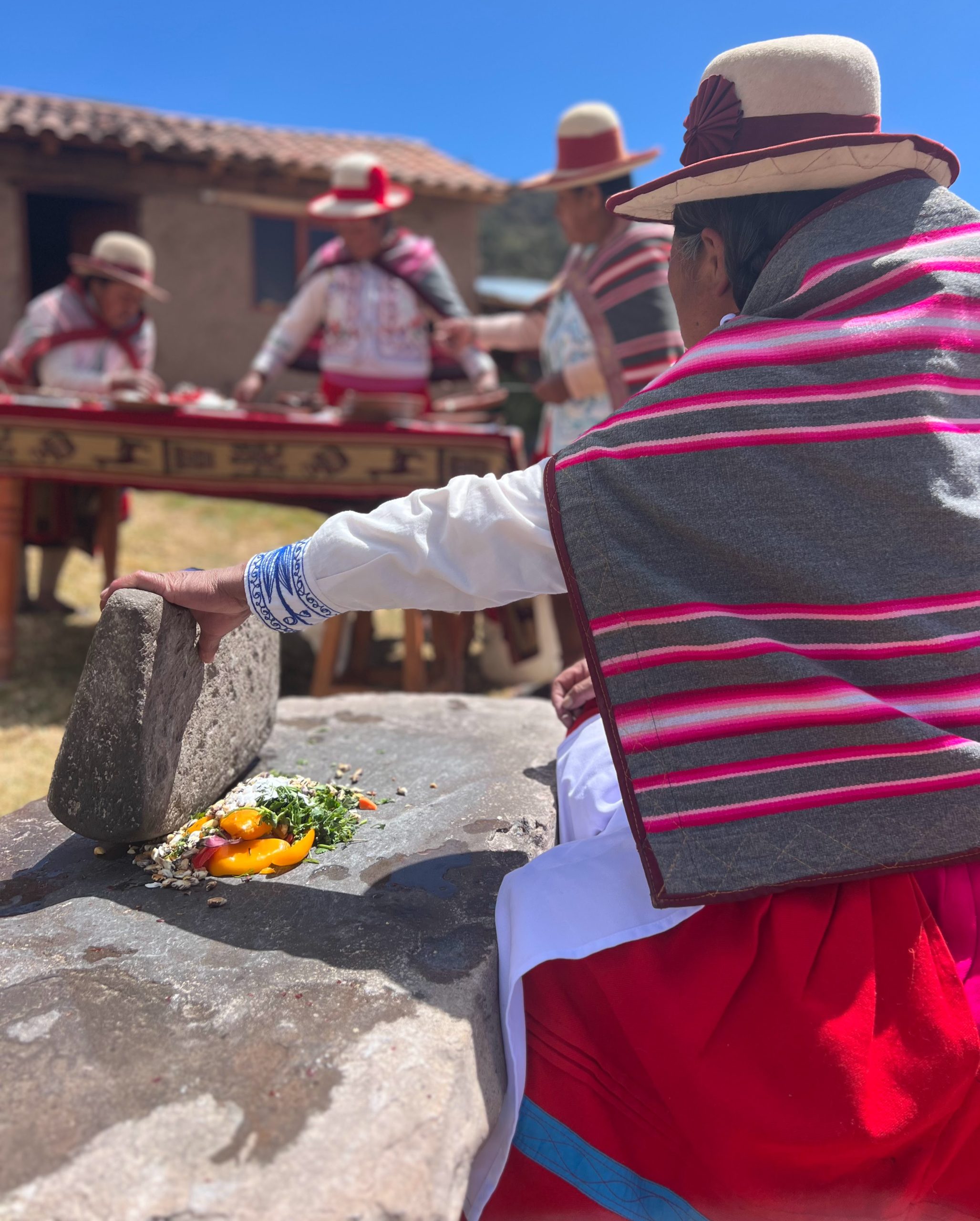
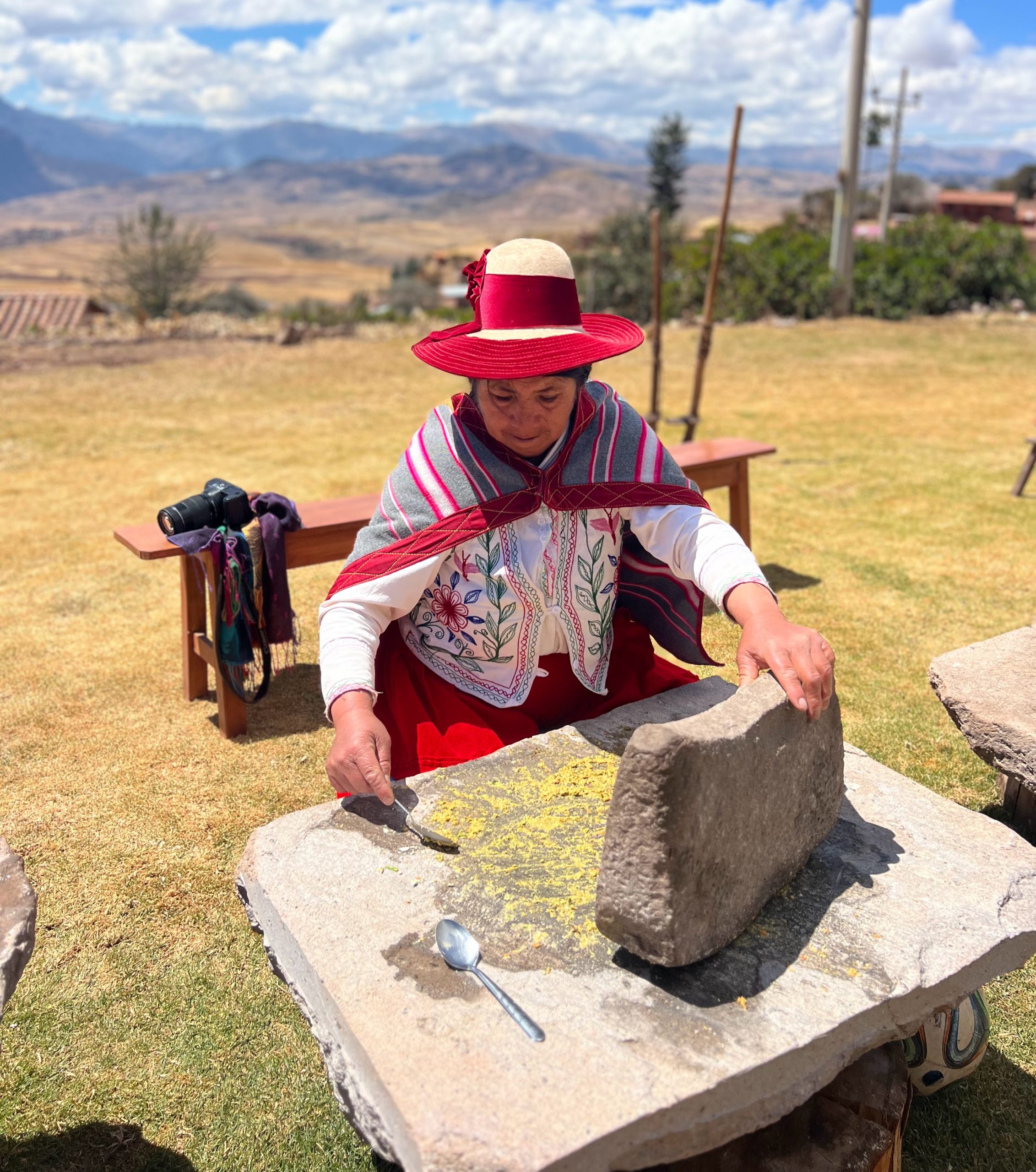
Next the women set up a table with a variety of vegetables and spices used for the day’s lunch as they explain the making of ‘Uchucuta’, a typical sauce made with a ‘Batan’, a large stone for grinding and milling commonly used in South America. They immediately put me to work, showing me how they mix and grind these ingredients using the Batan. The task was a bit cumbersome, and I certainly was having a hard time keeping up with the older woman, who was a master at this.
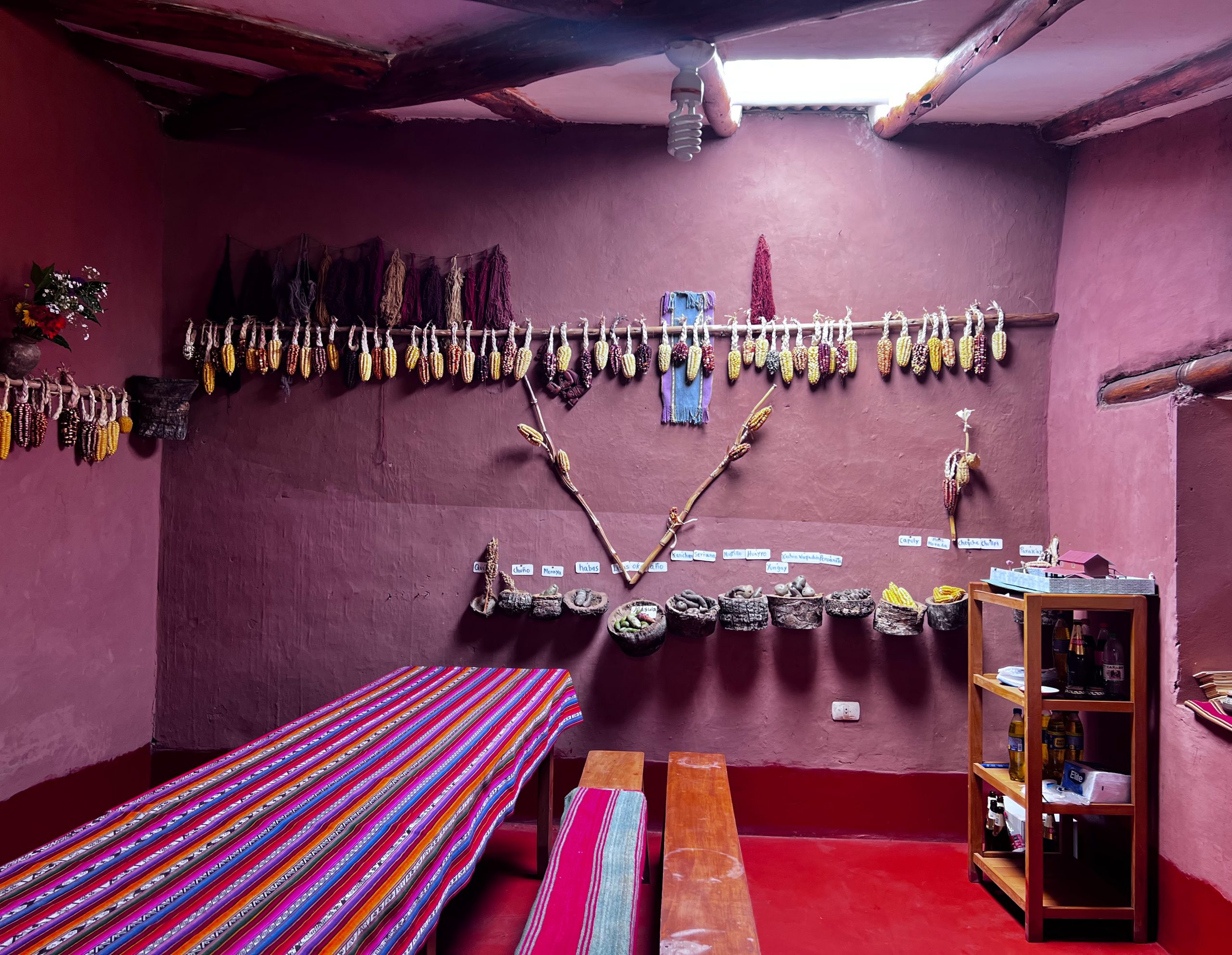
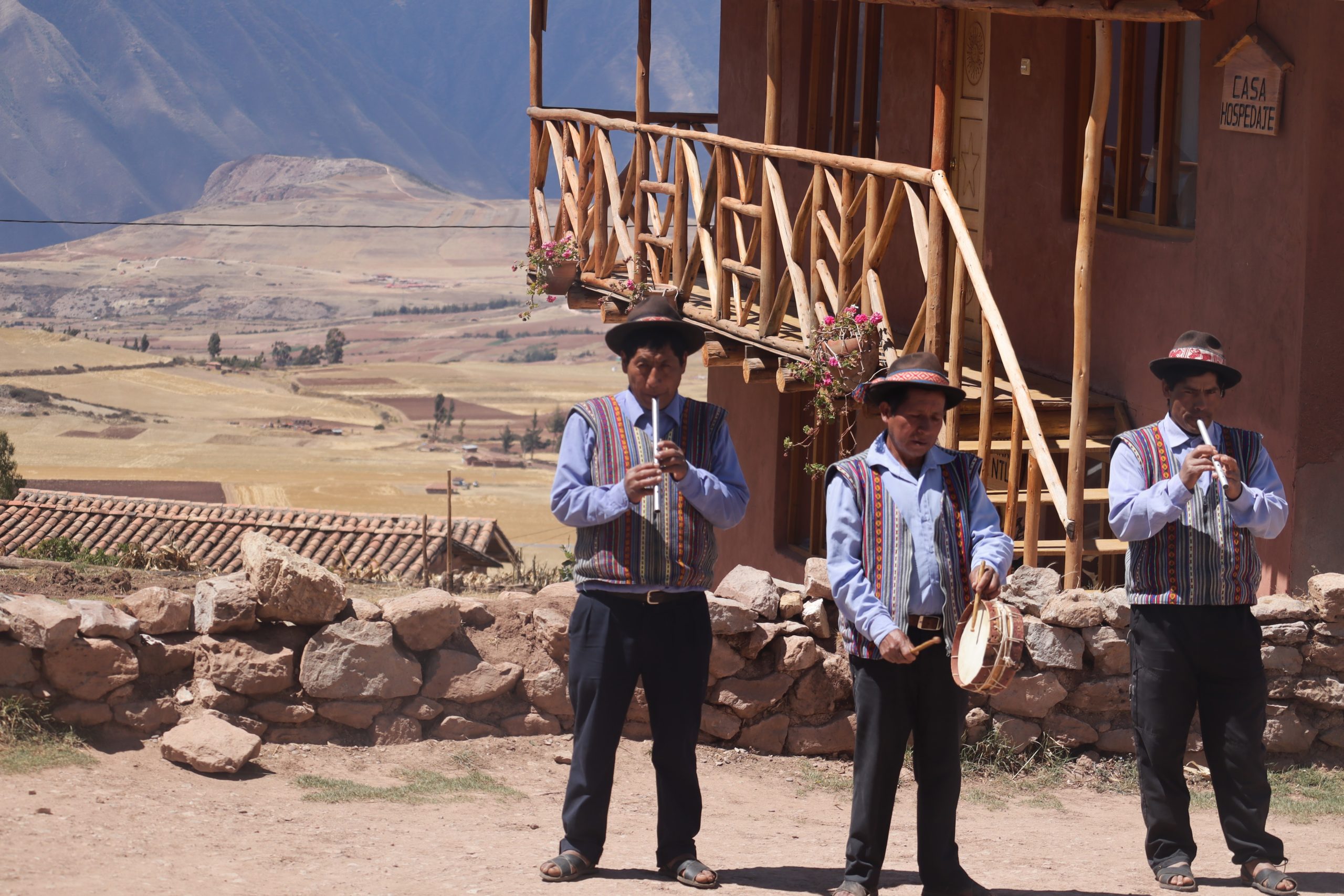
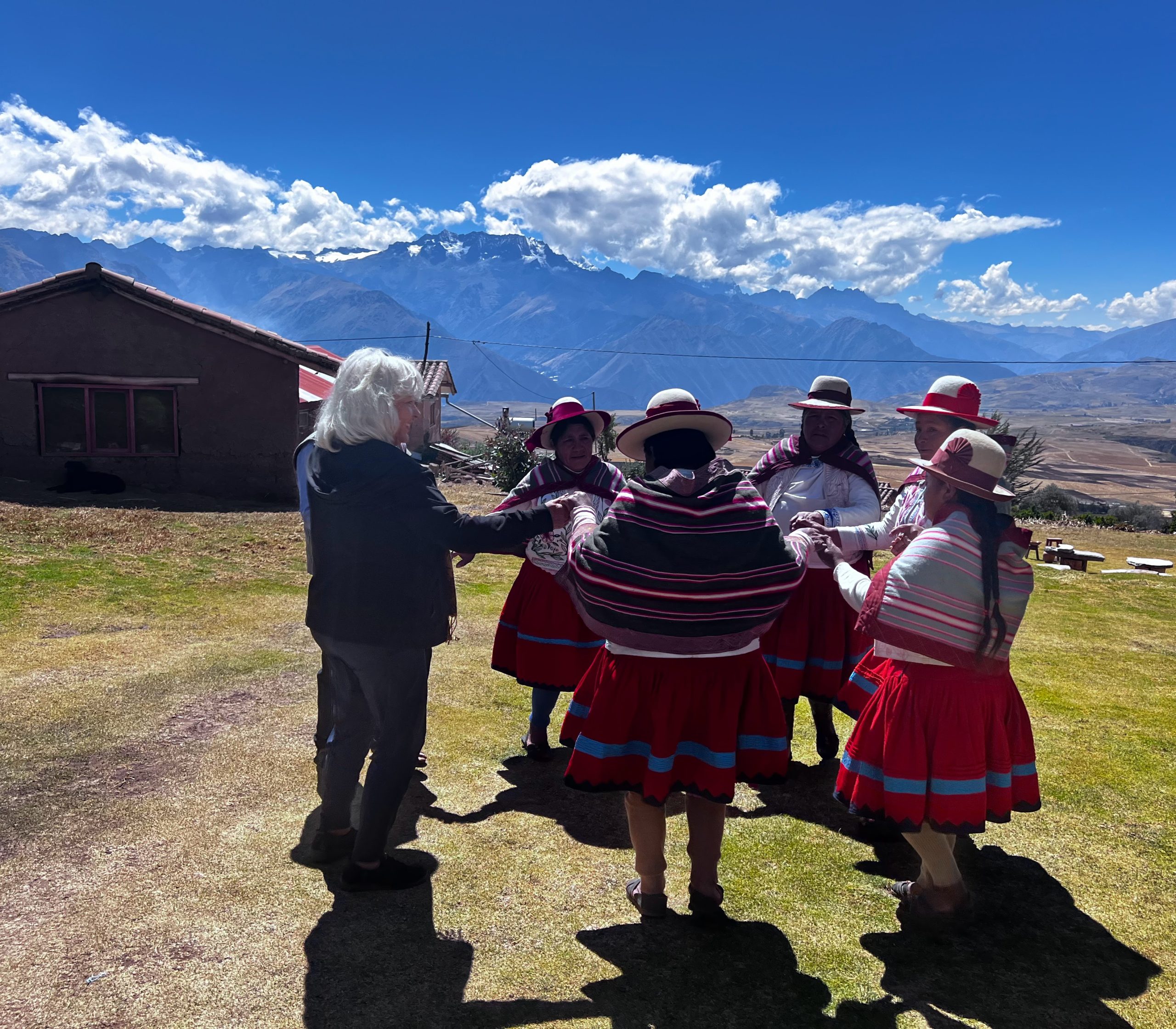
While the meal was being cooked, they played music with native instruments and asked me to dance with several of the women. They showed me their communal center, where they welcome folks like me and offer information on the range of vegetables they can cultivate. The organic lunch was quite delicious and offered an opportunity to ask questions and converse with those who joined us.
After lunch, I was able to walk the premises with the tour guide to witness firsthand their homes, gardens and weaving traditions and the magnificent views of the mountains. The entire experience is done outdoors surrounded by some of the most stunning scenery.
The Challenges Facing the Misminay
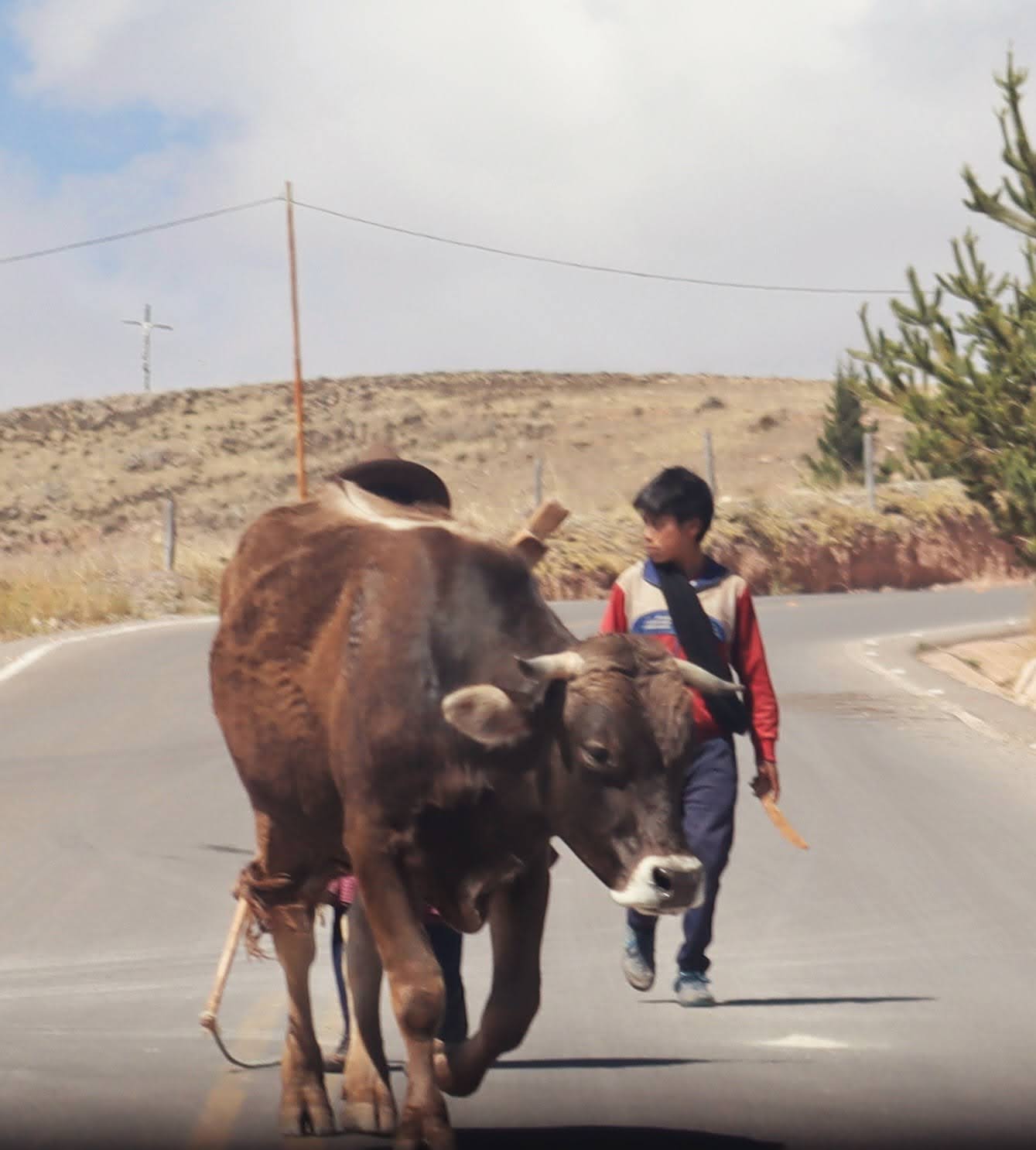
Presently, the Misminay community survives on a mixed livelihood consisting of agriculture and herding of sheep and cattle, with the addition of community-based experiential tourism as an important supplementary income source in partnership with local tour operators. This community also works with NGO groups that are training them to use sustainable techniques to help overcome challenges confronting their farming practices.
Similar to other Andean communities, climate change and access to water caused by unpredictable extreme weather are threatening their crops and livestock (ResearchGate+1). Tourism income is helpful but often seasonal and dependent on external factors that they have no control over.
Like so many other groups, the Misminay are also experiencing outmigration and an aging population. The younger generation is migrating to cities for work or study, which reduces the much-needed labor for ancestral farming and limits the passing on of skills and traditions. Other factors such as limited health services, education and opportunities to build sustainable projects also add to their vulnerability. For instance, the creation of a greenhouse to grow more vegetables at high altitude is a small project sponsored by an NGO that requires more resources to better benefit this community.
The government, along with NGOs, is also engaged in working with many of the Andean communities in this region to provide both education and opportunities for their long-term sustainability. The question lies is it enough and will these communities exist 50+ years from today?
Final Note and My Photos
This is my fifth visit learning about ancestral communities that are impacted by both climate change and modernization. This is a way of life that is both hard and different from our modern way of living, and yet these communities thrive and remain committed to their traditions and customs. It never ceases to amaze me and teach me about our humanity and its harmony with nature. I walk away from these experiences wanting to be a better human being.
I can only hope that my photos help capture the daily living and traditions of the Misminay community, appreciating their rightful place in this world as they overcome many challenges. In your travel plan, consider visiting such communities where possible as your support will enable them to continue preserving ancient traditions and customs as we as travelers seek to increase sustainable practices in tourism.
No Comments